2025 Transporting NZ North Island Road Freight Seminar – All about managing risk
The 2025 North Island Road Freight Seminar brought together more than 200 industry leaders, freight operators, and key stakeholders at the Napier War Memorial Centre from 10–11 October, to share insights, strengthen connections, and discuss the future of New Zealand’s road freight sector.
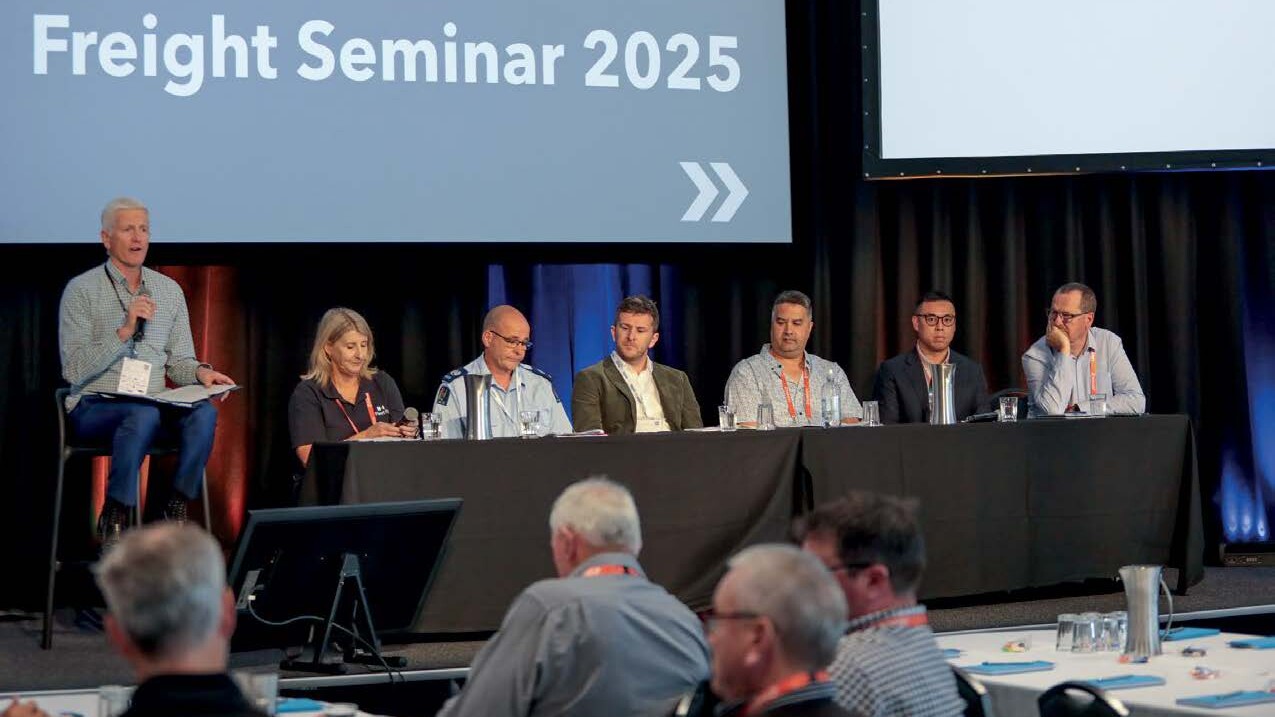
Panel: Transport Resilience
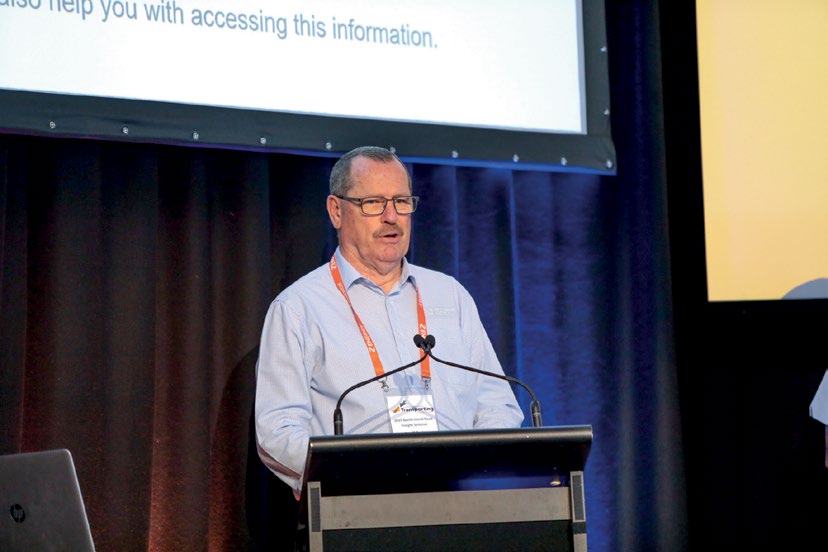
This year’s Transport Resilience panel brought together Andrea Waddell (NZI), Matt Arthurs (CVST), Matt Thomson (Grant Thornton), James Drummond (Pan Pac), Darren Wu (TTM Industry Steering Group), and Geoff Taylor (NZTA) to discuss how operators and agencies can strengthen resilience in an era of disruption and rising operational pressure.
The discussion began with how fleets can manage unexpected service disruptions.
Andrea Waddell emphasised that resilience can’t be built in the moment.
“The important thing is that resilience isn’t built in that moment. It takes months of preparation, getting your teams together and having a plan in place from the very outset. That you have a plan, and you know how to execute that plan.
“When the decision-making comes about, you bring in the key people you need to ensure the right decisions are made in a timely manner.
“And then the second part of that is to ensure that you communicate that plan directly to all stakeholders. From the management team right through to your drivers.
“You’ve got to have a plan, it has to be simple, it must be communicated, and it’s got to be executed well.”
With NZTA now placing greater focus on productivity and system resilience, James Drummond explained how those decisions are balanced with keeping freight moving.
“We’ve moved to a risk-based approach for traffic management,” he says. “Closures and temporary traffic systems will always be considered carefully. Disruption is inevitable, but we engage early and consult with affected operators and industry groups to minimise impact. We also work with MPI to understand animal welfare concerns, particularly in rural areas.”
Matt Arthurs spoke about maintaining safety and compliance under pressure.
“A lot of so-called pressurised situations aren’t that bad if you’ve done planning and learned from experience,” he says. “We’ll always have disruptions – what matters is how we respond. Hot debriefs and sharing lessons across the industry make everyone stronger next time.”
Darren Wu notes the changing face of temporary traffic management.
“We’ve shifted from a compliance-based system to a risk-based one, and that requires new skills. We need better understanding, communication, and trust – and that goodwill must be built long before a crisis hits.”
The conversation then turned to people leadership in times of disruption.
Matt Arthurs reflected that knowing your people is crucial.
“You build culture and resilience in good times. In an emergency, it’s too late. Know your people, know what’s going on in their lives, and that’s what helps you lead effectively when things get tough.”
James Drummond adds that relationships are key. “When roads were down [following Cyclone Gabrielle], relationships we’d built over time helped us relocate people and get operations moving again. Those connections kept us going – and it’s important to celebrate small wins along the way.”
Geoff Taylor agrees. “Relationships, resources, and communication are everything,” he says. “Most people don’t know their capacity until they’re tested. You’re often the head of your workplace community – you set the standard. Build those connections before you need them.”
Asked about warning signs that a business is stretching itself too far, Matt Thomson was direct.
“The obvious one – you’re not making money,” he says. “Margins are getting thinner across industries. If your costs are up and your returns are down, you need to act. Talk to your insurance broker, your bank, review subscriptions – small changes help. You can’t build resilience in a crisis. Right now, it’s about survival.”
Geoff Taylor closed by warning against cutting corners. “From a compliance perspective, the easiest things to stop doing are paying tax and doing maintenance,” he says.
“But the tax man and the government have long memories. We are seeing a whole different perspective now from IRD – you pay up or we wind you up.
“And road transport is overrepresented in the last 18 months in that statistic. Know your bottom line and if you are screwing yourself to get work, that’s a bad decision.
“Know your bottom line, and don’t take work that isn’t profitable. There’s a point where it’s not economic to turn the key – know where that is and stick to it.”
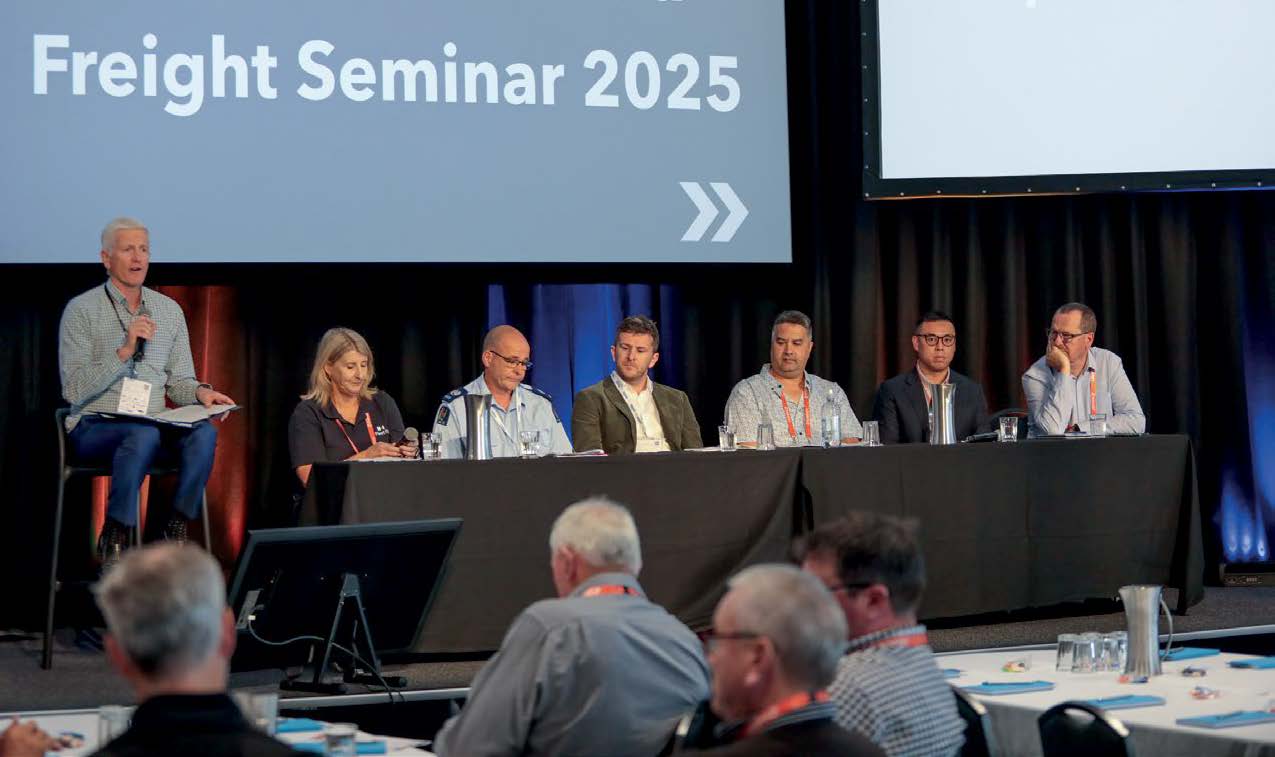
Cam Bagrie: The Political Landscape
Economist Cam Bagrie opened his presentation by providing context around the political and geopolitical environment facing both the wider economy and New Zealand’s transport sector.
He noted that we’re seeing growth at the political periphery – and not just in New Zealand. “If you go back to the 2023 election, the centre of the political spectrum received about 65% of the vote, while the periphery got 35%,” Bagrie said. “That shift isn’t unique to us – it’s a global phenomenon.”
Bagrie points to recent instability in French and UK politics, and warned that Australia may face similar issues. Countries that have moved further left, such as the UK and Australia, are seeing higher growth in unit labour costs – wages adjusted for productivity. “Both the Bank of England and the Reserve Bank of Australia decided not to cut interest rates because of growth in unit labour costs,” he says. “It drives inflation, and that has real-time implications for the global scene.”
Bagrie references the latest Ipsos Issues Monitor, which showed that before the 2023 election, the National Party was rated best able to handle 15 of the top 20 issues. “The most recent monitor now has Labour leading on 14 of those top 20,” he says. “That’s a big mood swing, and we’re starting to see it reflected in the political pulse. The National Party has never been a one-term government, but the polling suggests one hell of a battle ahead for the 2026 election – and, of course, keep an eye on Winston Peters, because it looks like he’s coming right up through the middle.”
Bagrie says the government is “stuck in what we call the impossible trinity. “You want to deliver fiscal prudence, offer tax relief, and build more roads, while also spending more on healthcare, education, law and order, and defence. Good luck getting all three.”
“There’s only so much to go around,” he says. “When society wants the government to do this, that, and the next thing, we’ve got to make sure the priorities are right – because everybody wants a piece of the pie.”
Bagrie stresses that if productivity growth doesn’t improve, including through better investment in efficient roading networks, New Zealand risks losing more people overseas
“It’s a new world, a new era,” he says. “It’s an era more like the 1950s, 60s, and 70s. Not bad times, but times when you had to be better at taking and managing risk.”
He says at the epicentre of any economy is the ability to take and manage risk.
“One of my real concerns about New Zealand is that we’ve beaten that instinct out of ourselves. We need to get it back.”
Bagrie described the economy as “two steps forward, one step back – we make progress, then we get into a bit of a hole”. Many people, he says, are telling him this is the worst economic climate since the Global Financial Crisis, particularly for the construction sector.
“There are tough trade offs ahead,” he says. “The government’s trying to do too much in too many areas. They need to pull back, prioritise, and stop what we call ‘clubbing seals’ – spreading resources too thin.” Looking ahead, Bagrie warned that the next few years would be crucial.
“So, where do we go from here? We’re not too sure with Donald Trump out there.
“My personal view is that the next couple of years will define New Zealand for the next 10,” he says. “We need to be prepared to make the hard, bold decisions. That’s tough – it means change and delivering a proper economic plan for where we’re going. This is a long game, not a short one.”
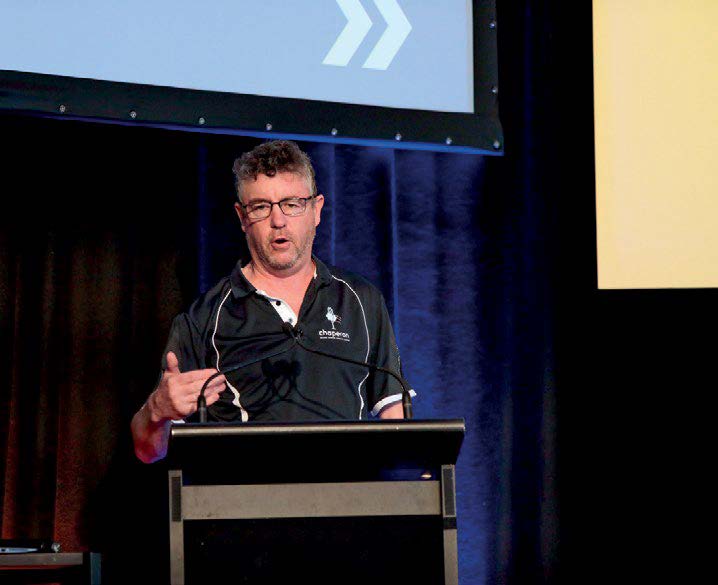
Snapshot
Regulatory Update
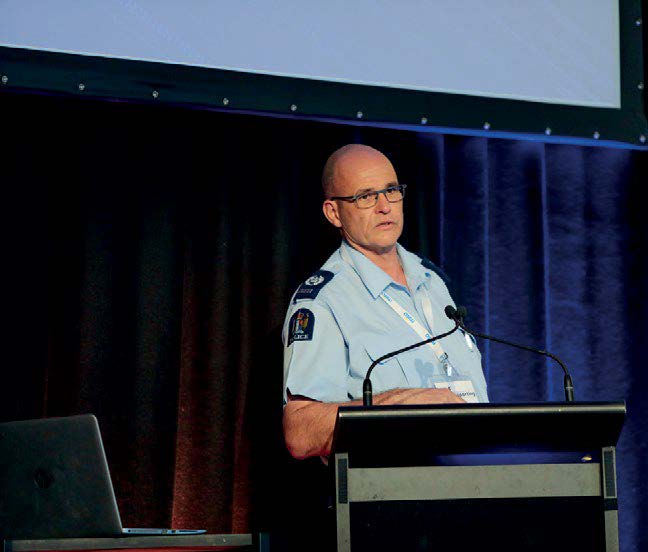
NZTA’s Geoff Taylor and CVST’s Matt Arthurs updated delegates on the regulatory space.
Three more CVSCs are opening next year – Bombay, Mackays Crossing and Taupō.
The Ministry of Transport and NZTA will soon consult on changes to a range of transport rules that will impact heavy vehicles and drivers. Phase 1 (late October 2025) will review permitting requirements for 50MAX and requirements for HPMVs to display H plates, and minor amendment to HV 2004 to incorporate by reference the Log Bolster Attachment Code. Phase 2 (February 2026) will review additional permitting requirements for:
Rental service licence holders when transferring trailer stock or delivering a combination for hire, HPMV over-dimension divisible loads, vehicle recovery licence holders when recovering a trailer from an HPMV-disabled combination to “nearest safe space”, over dimension vehicle movement and time restrictions, load pilot licence and vehicle requirements, and progressing improvements to heavy vehicle driver licensing, reviewing class 1/class 2 weight threshold, and amending overseas licence conversion requirements.
Engagement in the Alternative Fatigue Management System is increasing.
Forty-eight heavy vehicle drivers were apprehended last year for blood alcohol. Death and serious-injury crash statistics are not getting better.
Fifty-thousand heavy vehicle inspections are done a year. There hasn’t been a heavy vehicle crash due to mechanical failure for the past two years.
Twenty per cent of vehicles stopped on side of road have a fault. Potentially drivers aren’t doing their walk arounds in the morning and getting issues fixed before going into service.
Oral drug testing will start in December in Wellington.
New speed cameras will have the ability to recognise trucks limited to 90km/h.