

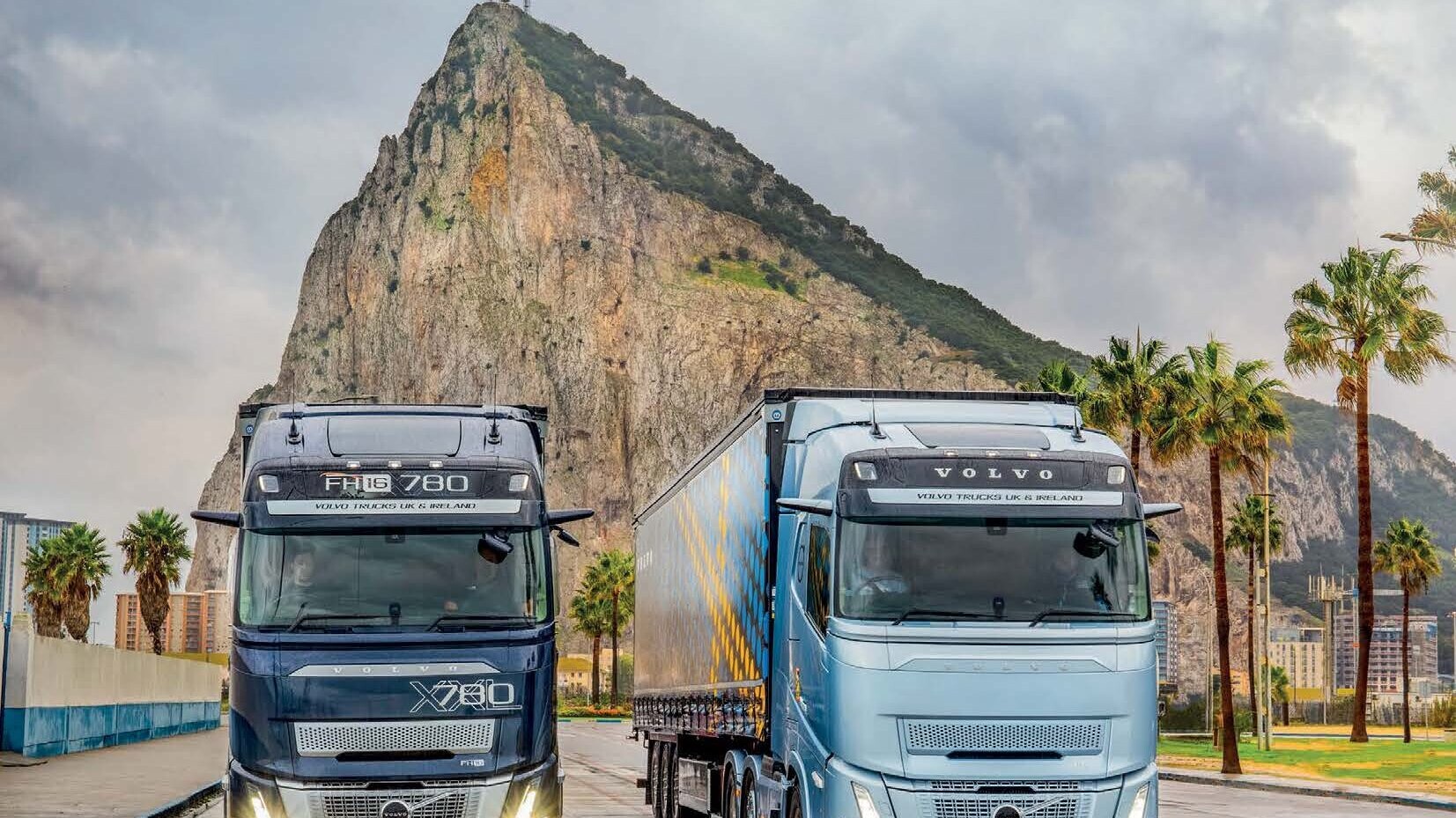
Will Shiers picks the wrong truck in a 2400km race across France and Spain to the Rock of Gibraltar.
If I bet on a one-horse race, the horse would fall over. So, when I entered a contest involving 1280 of them, the result was never in doubt.
My colleague and I were racing 2400km from Calais in northern France to the British outpost of Gibraltar on Spain’s southern tip. The prize? Bragging rights and the chance to drive one of two very different Volvos: the thunderous FH16 780 XXL or the restrained, ultra-efficient FH Aero 500 Globetrotter with I-Save. We flipped a coin. Naturally, I lost.
The idea behind our little adventure, aside from chasing some winter sun, was to explore whether 17L of displacement is really necessary for general haulage. One of the strongest arguments for choosing the FH16 over the 13L FH is its ability to hold speed on hills. With 581kW (780hp) on tap, it eats gradients for breakfast, but how much time does that really save over a long-distance run? Both trucks were loaded to 38 tonnes. The only rule? Obey the speed limit.
Day 1
Our race didn’t officially begin until we rolled off the cross-channel Euro Tunnel in Calais, which, frankly, was a blessing. I’d already made a meal of boarding the cross-channel freight train. Loading a standard artic onto it is awkward enough – add the Volvo Aero’s 239mm overhang and it becomes an exercise in precision I clearly lacked. The last thing I wanted was to crack a bumper before we even hit the continent, while my colleague, with his 280hp advantage, disappeared into the distance.
I was already preparing for three days as the underdog. The only question: just how far behind would I be when we rolled into Gibraltar? With the route agreed, we pulled out of the terminal together. He took the lead, and settled at the 90km/h limiter, while I slotted in behind with adaptive cruise control humming along. All was calm, until we reached the first of what would become many rolling inclines.
Now, with its 373kW (500hp) turbo compound D13K engine, an unmodified FH 500 would handle these hills without fuss. But this was the I-Save edition – the champion of fuel economy, not raw performance. Its clever I-See tech read the road ahead and made gear choices with economy in mind. It backed off at the top of each rise, dropped into I-Roll at every opportunity, and seemed less concerned with maintaining pace than sipping diesel.
The worst part? There was no override. The 12-speed I-Shift transmission was controlled entirely via dash-mounted pushbuttons, with no manual gear selection available. I tried stamping on the accelerator to trigger a downshift, which was met with a familiar click but no change in engine note. Kickdown had been disabled.
As the gap widened, it became painfully clear: the only way I would stay in the race was to glue my right foot to the floor and hope for a miracle.
On a couple of the steepest climbs, I watched in frustration as the engine lugged down to 850rpm, stubbornly holding onto 12th gear like its life depended on it. Eventually, it dropped into 11th, and I quickly jabbed the ‘hold’ button to stop it from upshifting again too early while planting my foot to the floor. It worked – but it was hard work.
Two hours in, the FH16’s taillights were barely visible, and my right thigh was already beginning to ache. I could just imagine the smug expression on my colleague’s face as I slowly disappeared from his camera monitoring system (CMS) screens. Then it hit me – a lightbulb moment. This truck was built to maximise fuel economy, so why not let it? Why keep fighting something I was never going to win?
As soon as I accepted that, a strange sense of calm washed over me, and I began to enjoy the drive. I’d have enjoyed it even more if I were an operator paying for the fuel. Despite my heavy right foot, the display was showing an impressive 4.3km/L – and it was still climbing. When I stopped for my 45-minute rest break (a legal requirement after 4.5 hours behind the wheel), the figure had nudged up to 4.6km/L. And as it turned out, the FH16 was only five minutes ahead.
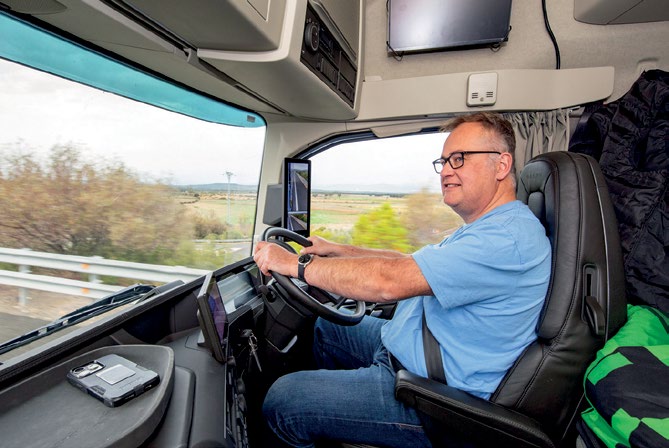
Fuelled by pain au chocolat and black coffee, I restarted the stopwatch and rejoined the route. This time, I let the truck take even more control, switching on pilot assist to keep me neatly centred in the lane. Feeling fully settled, I started exploring the interior updates. I flicked through the four configurable home screens on the digital dash and experimented with the large new touchscreen, which was far more intuitive than before – it’s app-based now, and not unlike using an iPhone.
By the time we rolled into Niort, about 160km north of Bordeaux, the gap had stretched to just over 15 minutes.
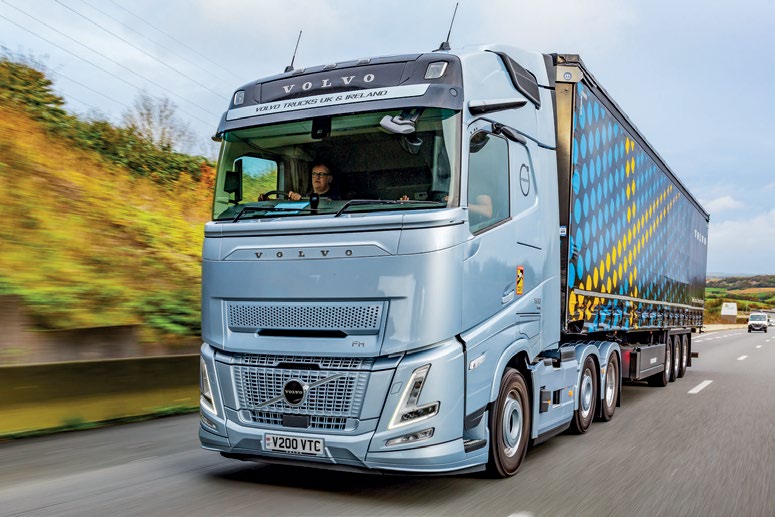
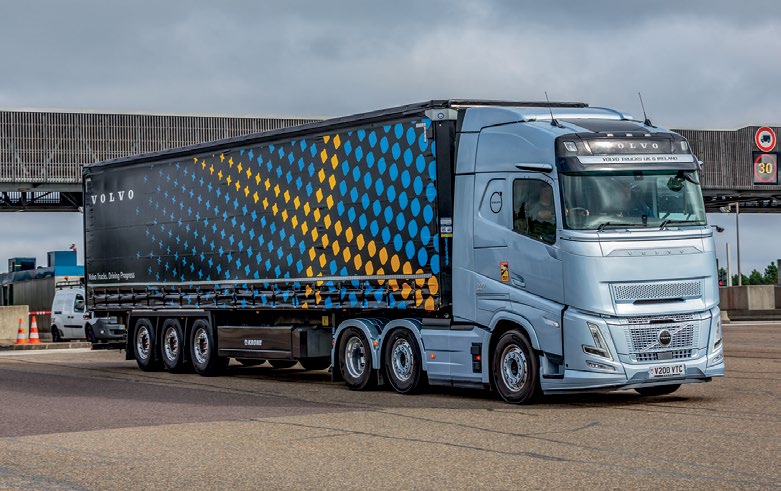
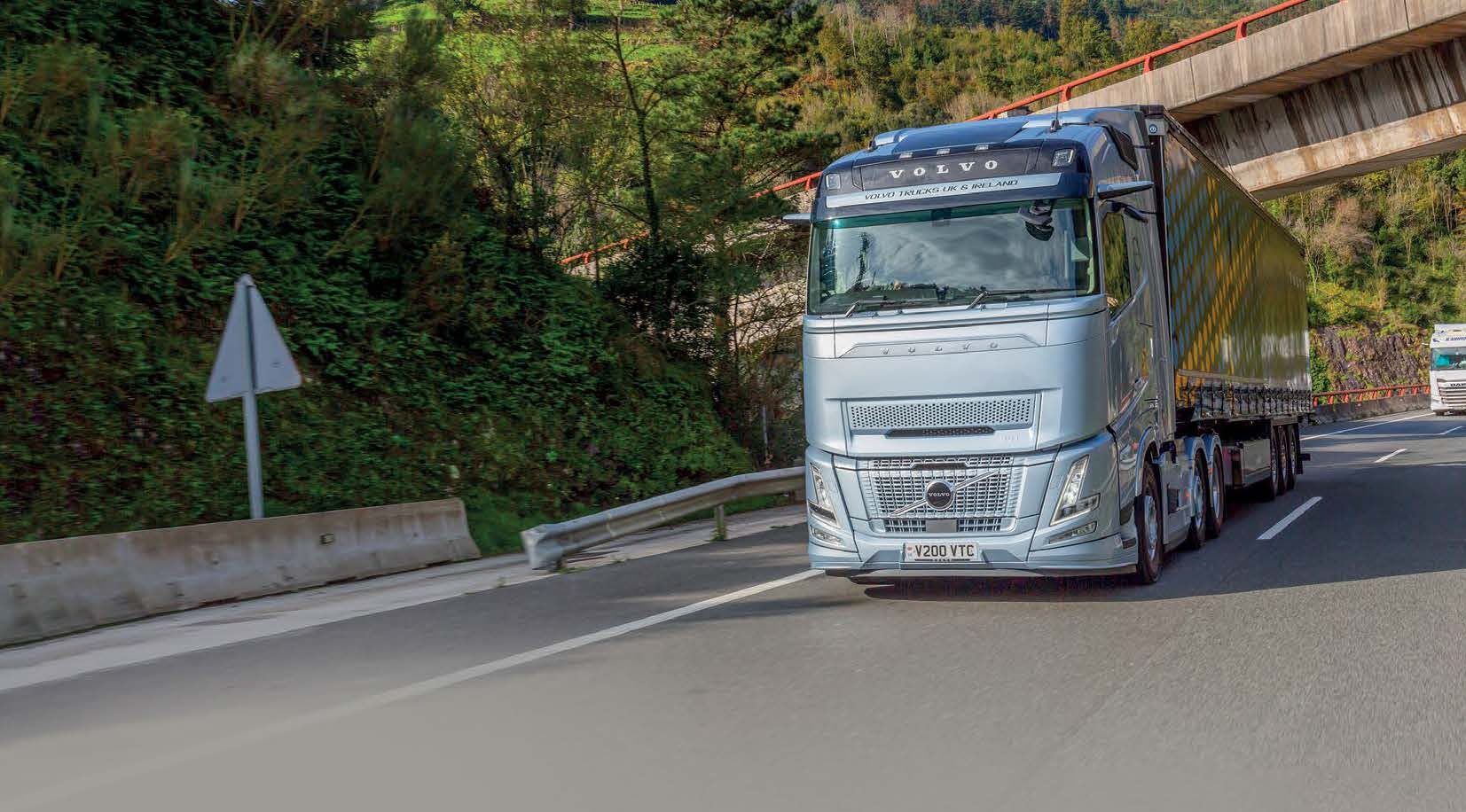
Above left: FH 500 I-Save is designed to slice down the highway like a hot knife through butter.
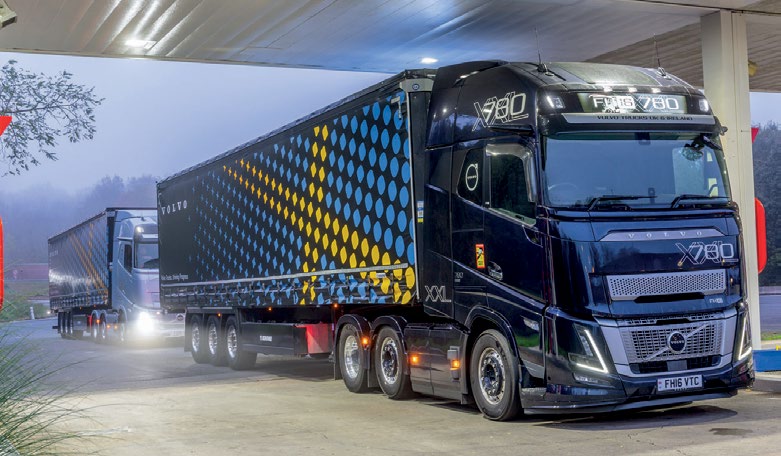
Above right: Despite its physical and mechanical size, the FH16 780 XXL is an impressive fuel-sipper in its own right.
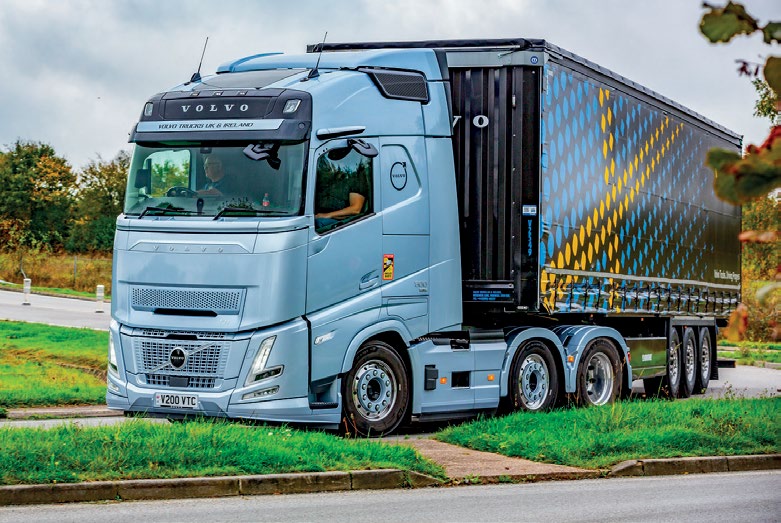
Bottom left & right: Aero cab has a unique look to it.
Day 2
We rolled out before dawn into steady rain and low cloud – perfect conditions to test the night setting on CMS. I was still far from confident reversing using screens instead of mirrors, but the low-light image enhancement was seriously impressive. When a rogue raindrop blurred the lens, flicking on the heated element cleared it in seconds.
The more time I spent in the cab, the more I appreciated it. By now, I’d given up trying to out-drive the systems and just let the truck do its thing. Fuel economy kept improving. At one point the day before, I’d managed to hit 5.0km/L – pretty astonishing, though I knew that wouldn’t last once the Spanish terrain kicked in.
France was starting to drag. I’d forgotten just how vast it is. The motorways were excellent – smooth, fast, and nearly empty – but the tolls were piling up. By this point, we’d clocked close to €250 (about $450). Pricey, yes, but for that money, we got a road surface better than most British airport runways and barely any traffic at all.
As we approached the Spanish border, the road profile changed dramatically. I set the cruise control’s tolerance to allow a 5km/h buffer on either side of the limit, and the FH Aero handled it beautifully, rising and falling through the gears without any fuss.
gears without any fuss. The sun was still out, but the weather reports weren’t encouraging. Blue skies were forecast to give way to two days of proper West Coast-style rain – not ideal when your final photo stop involves a very large rock.
Then came the day’s curveball. I couldn’t find the Volvo Trucks dealer in Valladolid, where we were due to stop overnight. Instead, I ended up in the thick of the city, crawling through tight residential streets and hoping like hell I wouldn’t meet a badly parked Seat (a Spanish-made VW) head-on. To make things worse, I drifted into a low-emissions zone, and I had no idea if I needed paperwork for that.
It turned out the FH16 had taken a similar detour, which at least explained why the gap between us was only about 25 minutes when we finally parked up for the night.
Day 3
We hit the road early again and pulled into a truck stop in Salamanca for breakfast. Like every stop we’d made in Spain, the prices were almost too good to be true. This place offered overnight parking, dinner and a glass of wine for just €12 (NZ$21.50).
That said, it was clear there wasn’t a huge amount of money circulating in the local haulage scene. I couldn’t believe how many Series 3 Scanias and Renault Magnums were still out there, working hard on long distance shifts.
The hills across this part of Spain were no joke. On one of the longer climbs, the FH Aero dropped to 61km/h in 10th gear at just 900rpm. I could only imagine my colleague, in the 780hp FH16, cruising over it without breaking a sweat.
Then the weather turned, and “heavy rain” didn’t cover it. The storm system sweeping across Spain that day would cause catastrophic flooding, claiming 158 lives and marking the country’s worst flood event on record.
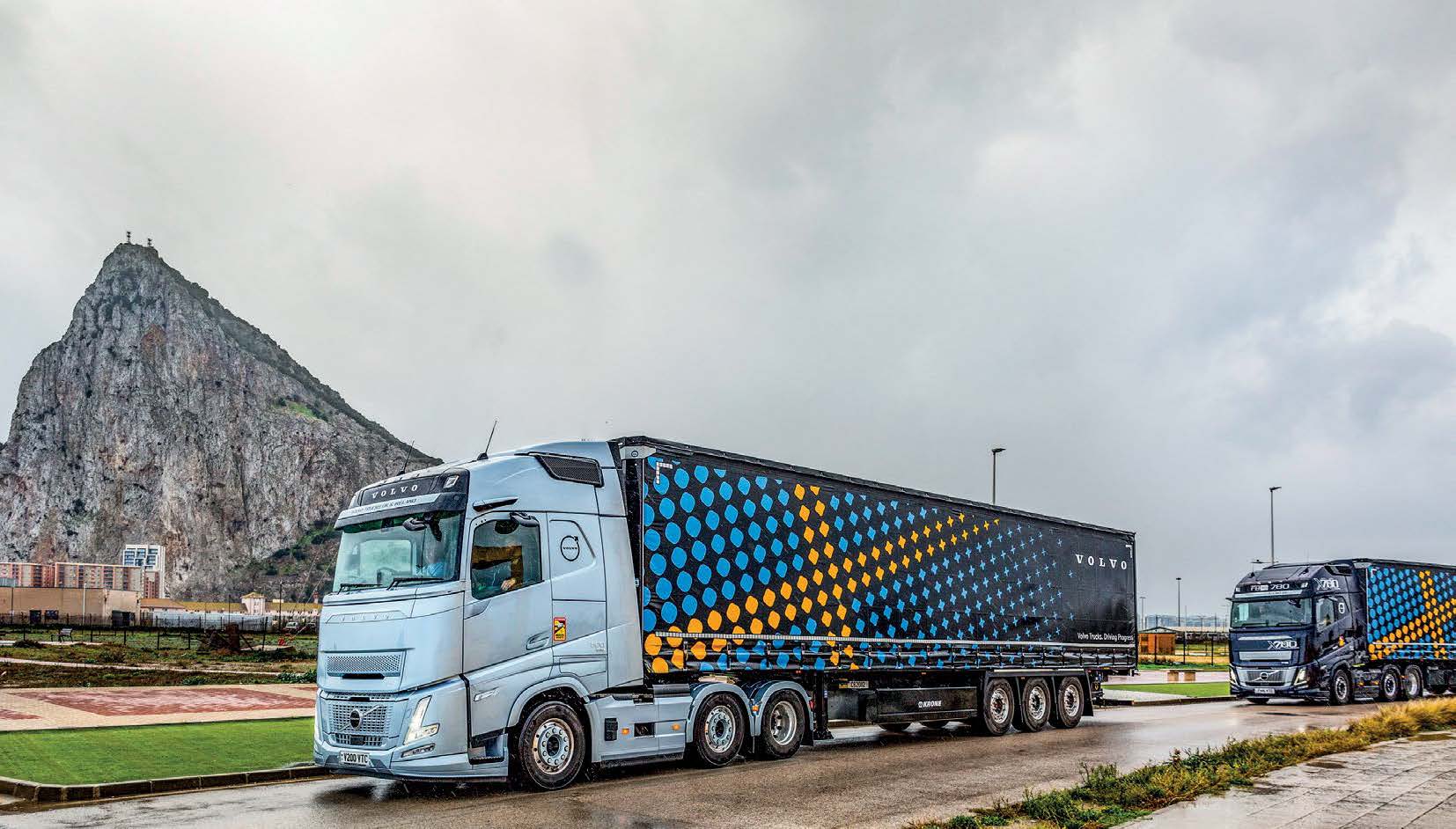
Eventually, I rolled into La Línea, just 19 minutes behind my colleague. The town hugs a short 1.2km stretch of border with Gibraltar, and as if by magic, the skies cleared just as I arrived. The rain stopped, the clouds lifted, and the Rock of Gibraltar appeared, bang on cue.
Photo taken. Mission accomplished. Race over.
Conclusion
At first, I really didn’t get on with the FH 500 I-Save. It felt like the wrong tool for the job. Racing across Europe in this is like Ardie Savea turning up to a test match in ballet shoes. He might still get stuck in, but it’s hardly the footwear you’d choose for a scrap.
But credit where it’s due; this truck has strengths. Over three days and 2337km, the time difference between the two vehicles was just 59 minutes and 28 seconds. That’s genuinely impressive, especially considering the FH 500 is designed to sip diesel, not eat up tarmac.
Once I stopped pushing it and let it find its rhythm, I started to enjoy the drive. After 10 hours at the wheel, fatigue built – but the cruise and safety tech didn’t just ease the strain, they made it genuinely relaxing. Fuel economy, though, was the headline act. The FH16 returned a very respectable 3.9km/L, but the FH 500 Aero managed an outstanding 4.83km/L. To put that in perspective, back in the day, Commercial Motor magazine was thrilled if a 38-tonner hit 2.5km/L on the test route. Based on my rough figures, the FH 500 saved about $320 worth of diesel on the one-way trip. Sure, my colleague probably got a thrill flattening Spanish hills and blasting out of toll booths, but was it $640 worth of fun? I’m not so sure.
If I were picking purely as a driver, I’d still lean toward the FH16. But from an operator’s point of view? The FH 500 Aero I-Save makes far more sense. Sometimes, the smart choice wins – it’s a classic case of the head ruling the heart.
Photos: tomlee.gallery
Read more
Transport royalty
0 Comments13 Minutes
Commer Chronicles
0 Comments12 Minutes

The pay is better
0 Comments5 Minutes

Time to catch up
0 Comments6 Minutes