

What a Show – An attendee from early on, Bruce Honeywill looks back at the history of the Brisbane Truck Show
Visitors might have worn grease-stained overalls or jeans, R M Williams boots and big hats, but it was all business during the Brisbane Truck Show’s early years.
Those cheque books hanging out of the bushies’ back pockets weren’t for show: a lot of glad-handing by the truck salesmen, a bit of tyre kicking, sitting a few minutes behind the steering wheel, and old mate was scratching out a cheque – another handshake, another truck sold. Within a few days, these same trucks would be spewing red dust on outback roads, hauling cattle or wool, loads far beyond their originally intended roles. This was how business was done, the days before the internet, even before Truckin’ Life and the Best Deal magazines came along.
The road transport industry was building up a head of steam by the 1960s. Roads were improving, trucks more powerful, and even with handicaps like road tax and other restrictions, the trucks were pulling significant freight off rail. So, some reckoned, it was time to show off a little.
The first Queensland Truck Show rolled out in 1968 at Haulmark Trailers’ Rocklea yard, featuring just 21 exhibitors. But the precedent was set. By 1970, increasing interest forced a move to the nearby Rocklea Wool Stores. They were a sight back in the day, gleaming prime movers: red and green Mack B-models, Kenworth W-Models, Internationals, the ‘glass-cab’ Atkinsons and a few slower British breeds now on the fade, all lined up beside towering stacks of wool bales bound for Italy, China and the UK. This was the sharp edge of road transport on display in the days long before computer-aided design or the World Wide Web.
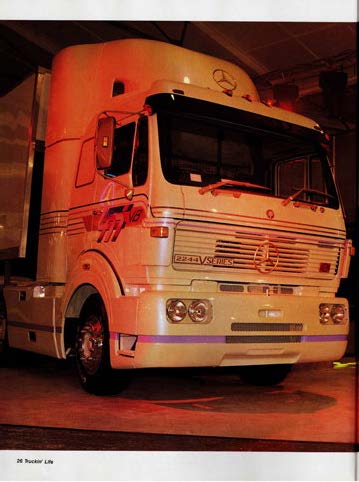
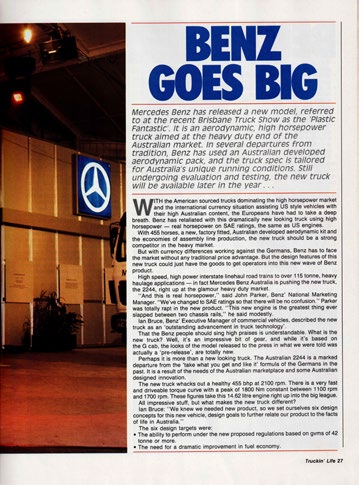
The ‘Plastic Fantastic’ Benz from 1987 prioritised aerodynamics. Photo: Truckin’ Life.
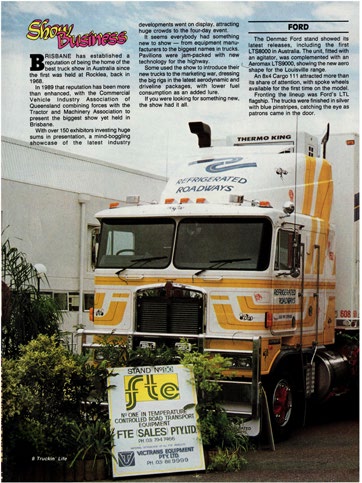
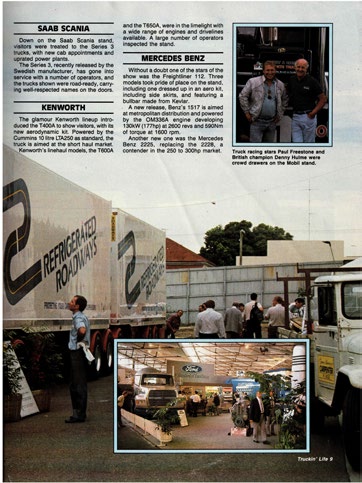
Classic scenes from the 1989 show. Photo: Truckin’ Life.
The Brisbane Truck Show has knocked up a lot of miles since those early days when a handful of gleaming prime movers inspired dreams in young fellas, some of whom are industry elders today.
Today, over 40,000 industry professionals, enthusiasts and innovators converge in May every second year to see the latest in heavy-vehicle technology and to glimpse where transport is headed next. But before it rose to become the southern hemisphere’s premier truck festival, the show was a simple trade gathering, born amid Queensland’s “sheep’s back” economy and fuelled by the pioneering spirit of outback and interstate operators. The showcase of the big wheels of the time set off on the long road to the world class event we know today.
Expansion
Through the early 1980s, as Australia’s road-transport networks expanded and industry players grew bolder, the show outpaced the wool stores. In 1983, it relocated to Brisbane’s RNA Showgrounds, renamed as the Queensland Truck, Trailer and Equipment Show. The move unlocked the doors to indoor pavilions and outdoor display areas, accommodating major manufacturers – Kenworth, Mack, Volvo and large trailer and component suppliers. It wasn’t just about prime movers anymore: the latest in diesel engine technology, trailers and road train dollies, braking systems, telematics and ancillary equipment manufacturers set up alongside the big rigs.
Over the next 28 years, the RNA Showgrounds became synonymous with Australia’s trucking heartbeat. New truck releases rolled in under bright lights. Dozens of exhibitors crammed into every bit of real estate, while visitors soaked up technical seminars, live demonstrations and networking functions until late into the evening.
And the Brisbane Truck Show became the destination for tens of thousands of tyre kickers, wide-eyed kids climbing into cabs while mums and dads checked out the gear and truck salesmen guided them to a decision and the universal conversation, ‘Can we afford this?’
Through the 1980s, Truckin’ Life took the plunge and took on a large display area selling magazines, books, branded clothing, even jigsaw puzzles made from truck photos from the mag.
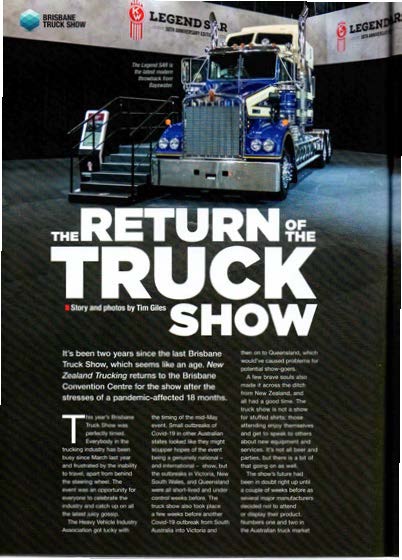
In 2011, the Brisbane Truck Show moved to the Brisbane Convention & Exhibition Centre. From a pure trade fair to a polished, brand-driven spectacle. Exhibitor space expanded, visitor numbers climbed past 30,000, and the global ambitions of Australian truck-makers came into focus. The convention centre’s air-conditioned halls, high-ceiling foyers and adjacent hotel facilities gave the show an unmistakably international feel.
This era revealed a key change in how business was done. One seasoned sales rep quipped after the 2015 show that nobody was buying trucks on the spot anymore – it was all about brand awareness. Major manufacturers were pouring up to $1,000,000 into spectacular stands, complete with lounge areas, digital displays and concept vehicles. The objective was to plant corporate logos firmly in buyers’ minds, knowing that orders would be placed online or through dealer networks once the show doors closed.
The 2015 iteration still delivered trucking delights with the reveal of the International LoneStar, staring proudly from its pedestal, and the gleaming Kenworth and DAF range from Paccar’s bronzed “one-family” stand. Trailer-makers like MaxiTrans unveiled modular VersaBolt trailer systems, while light-duty players such as Foton enticed tradies with sub-$40,000 workhorses. But the consensus was clear: the show’s power lay in perception more than in on-site sales.
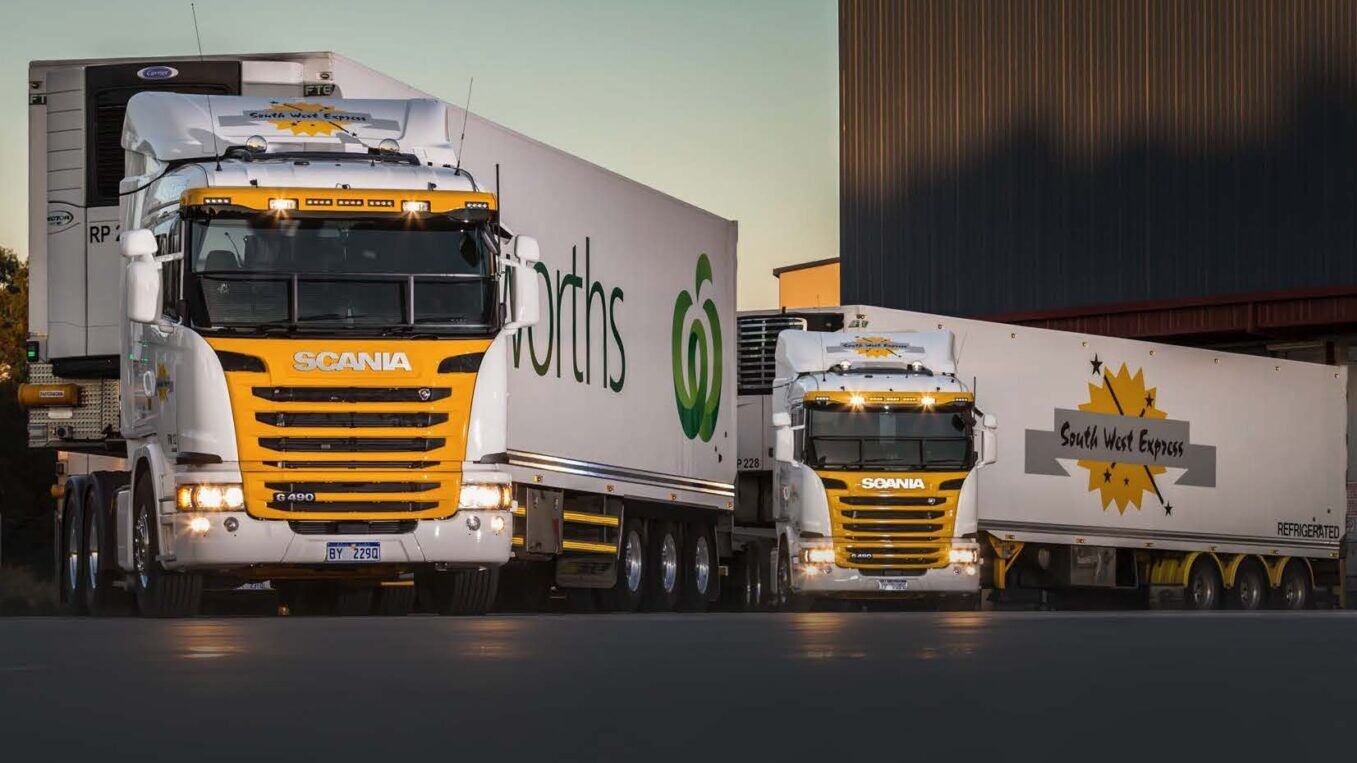
In 2017, I was the editor of Big Rigs newspaper. I recall the usual hustle-bustle of the truck show, meeting mates from the road, other publications and of course the truck manufacturers, who by this time, brought a lot of style to the occasion. Scania had a world-class barista and the Italian coffee machine had a continual head of steam for the duration of the show.
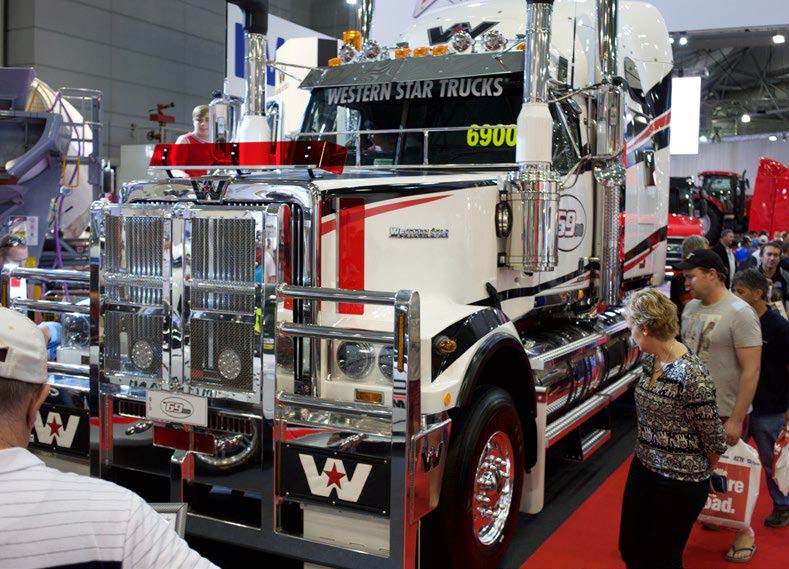
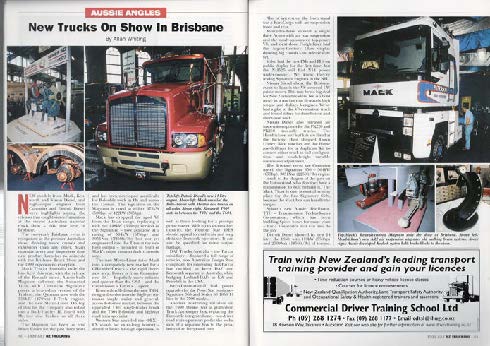
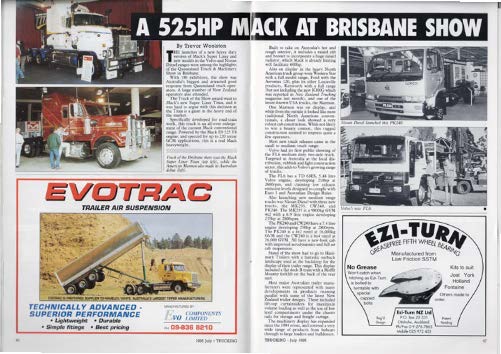
Left: Kenworth’s ‘04’ series debuted in 1999, as did the ‘Mack Magnum’. Right: In 1995 Mack unveiled the Super-Liner Titan while Marmon debuted.
I was working then with a smart young journo, Kirsten, who told me about meeting a ‘nice elderly man’ who seemed to be enjoying a day out at the truck show. I had to tell her she had been talking to (the late) Jim Cooper, who only up to a few years ago, ran the largest road train fleet in the world. This is the type of meeting that happened in every aisle of the truck show. Young ‘gonna-be’s to industry elders tied together by a love of the nation’s roads and the trucks that kept the country alive.
In 2019, the show expanded yet again with the launch of Truck Week, which stretched across South Bank and the Brisbane CBD, with career expos, “truck-themed” entertainment and community events. By 2021, the main show incorporated the Heritage Truck Show at Rocklea, a rolling tribute to classic rigs, and ran the Heavy Equipment & Machinery Show concurrently at the BCEC. What began as a biennial trade show had blossomed into a week-long celebration that brought together operators, suppliers, regulators and even school-leavers exploring transport careers.
The truck show has been, since the first effort at Haulmark Trailers, a window on the evolution of road transport technology. Global emission regulations changed the look, feel and performance of truck engines.
The 2021 show, along with the rest of the world, was hammered by the Covid 19 pandemic that saw the withdrawal of several major manufacturers, but under the ethos of ‘the show must go on’, the Brisbane Truck Show did just that.
Into the future
For more than half a century, the Brisbane Truck Show has served as a barometer for the transport industry’s direction. Manufacturers still time major model launches to coincide with the event, knowing they’ll capture the attention of fleet owners who compare ergonomics, driveline efficiency and telematics solutions on the spot. But as procurement moves increasingly online, the show’s real value lies in the feel, touch and smell of walking among the world’s best trucks. Nothing can replace the feel of a steering wheel from up in the cab or walking the length of a fully hooked-up road train.
Looking ahead, the Brisbane Truck Show is set to deepen its digital edge. Expect augmented reality walkthroughs, remote live demos for overseas partners and data-driven matchmaking between exhibitors and fleet managers. Regional spin offs – tailored to vocational niches in mining, agriculture or metropolitan delivery – may emerge, ensuring the show’s reach extends beyond Brisbane’s CBD.
On the sustainability front, with Australia’s net zero commitments looming, zero-emission heavy vehicles will no longer be prototypes but production-ready prime movers. Policy roundtables at the show will shape the rollout of infrastructure, including hydrogen refuelling corridors and high-capacity charging hubs, cementing Brisbane as the hub of heavy-vehicle innovation in Asia-Pacific.
From a handful of Mack B-models parked beside wool bales in Rocklea to a 40,000-strong audience immersed in hydrogen-fuel-cell demonstrations, the Brisbane Truck Show has tracked the trajectory of Australia’s transport industry. It has weathered changing purchasing habits, digital disruption, decarbonisation imperatives and pandemics, yet remains the southern hemisphere’s premier heavy-vehicle showcase. One thing is clear: whether you’re a fleet owner, a technologist or simply a truck-mad enthusiast, Brisbane’s grand exhibition hall will continue to set the pace for the road ahead.
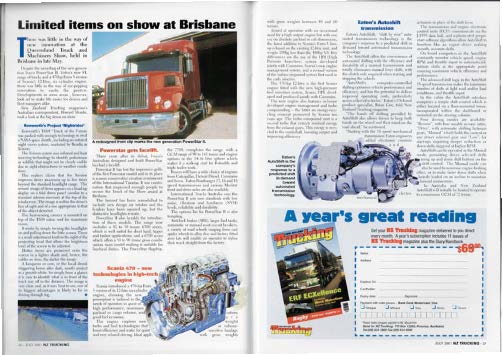
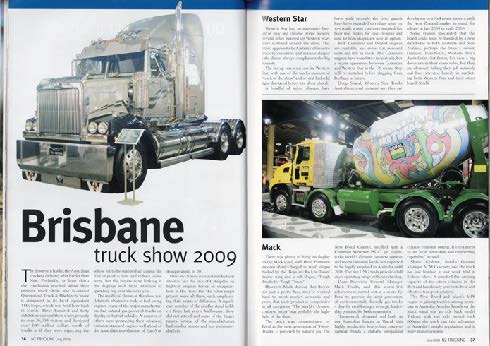
Left: The new millennium brought innovations like night vision and Eaton’s AutoShift. Right: The 2009 show was strong despite the hangover of the GFC.
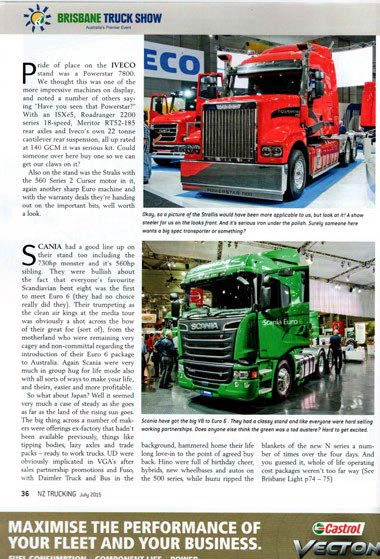
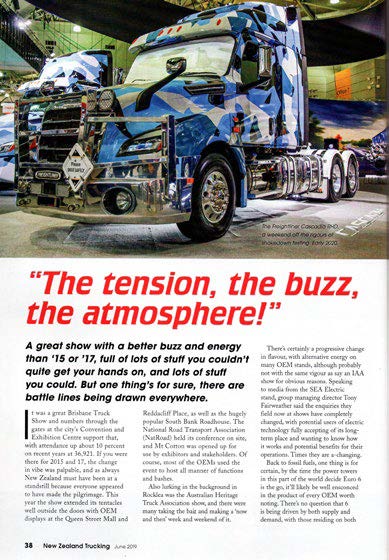
The 2015 show saw Scania introduce Euro-6. But who could forget Iveco’s home-grown road train prime mover, the Powerstar 7800? The 2019 and 2021 shows bookended the Covid-19 pandemic. Happily, it’s been onward upward since then.
Read more

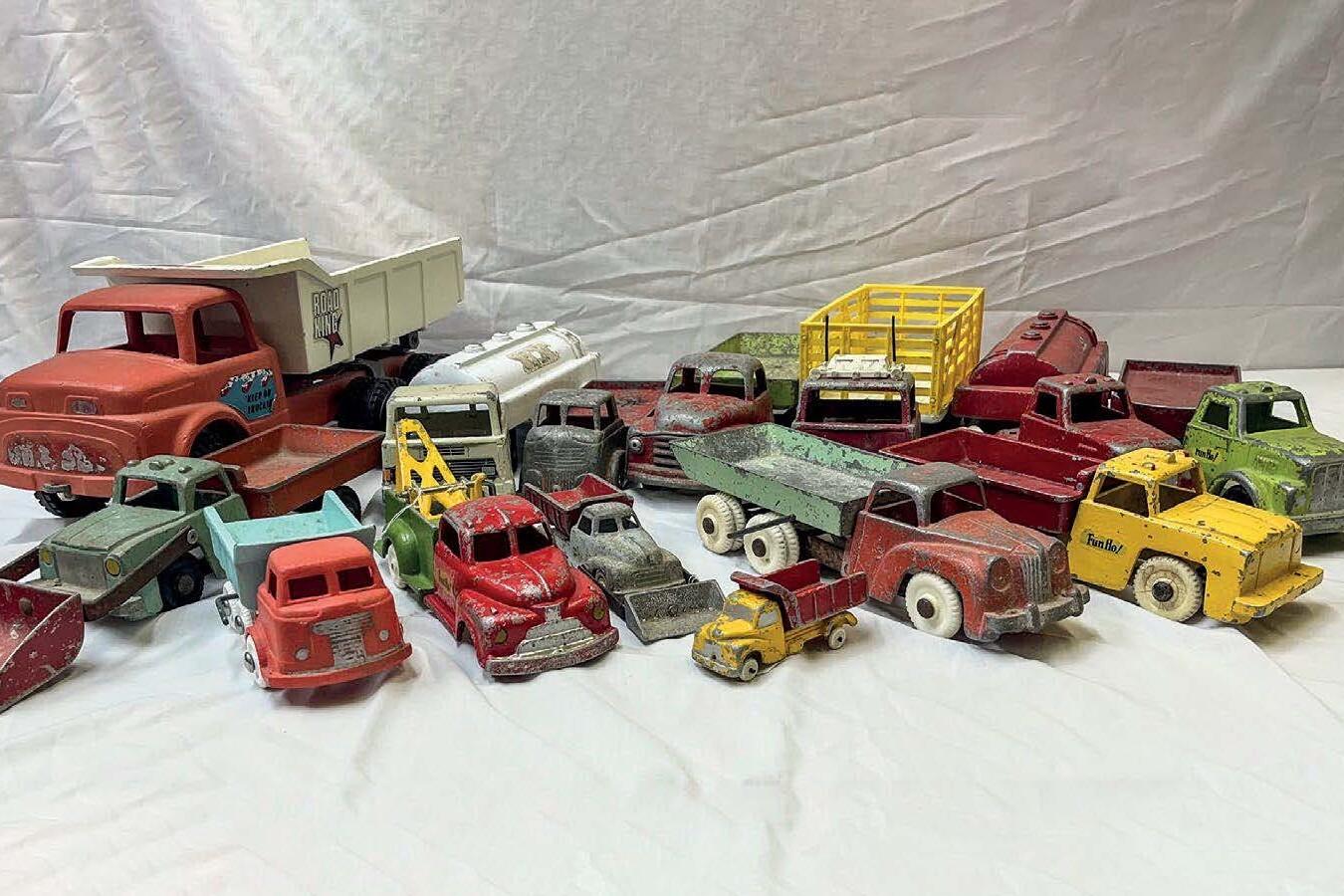
90 years of Fun Ho! toys
0 Comments5 Minutes
The perfect partnership
0 Comments14 Minutes
Up and up
0 Comments10 Minutes