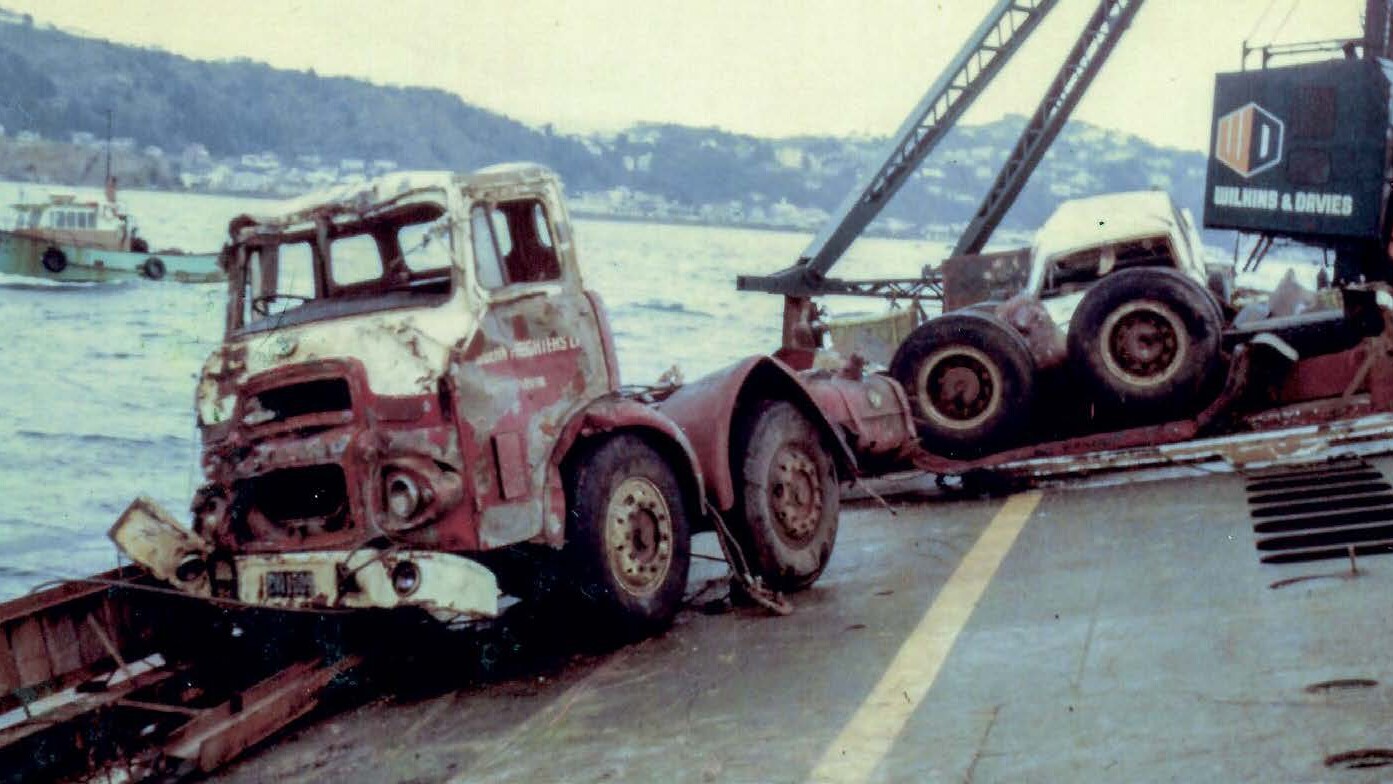
Levin-based Modern Freighters operated three Leyland Octopus trucks, one of them lost in the sinking of the Lyttelton-Wellington ferry Wahine in 1968. It was later salvaged and rebuilt, and the company also rebuilt that unit’s sister truck into an oddly unique configuration.
During the 1960s, 1970s and 1980s, Modern Freighters ran a fleet of refrigerated body truck and truck-and-trailer units transporting chilled and frozen products by road from the top of the North Island to the bottom of the South.
The company was privately owned by Ken Sutherland (who managed the business side) and Peter Pollard (who looked after transportation); Peter’s wife Helen was the office manager.
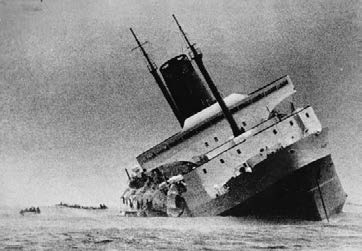
Two of the company’s three Leyland Octopus trucks were the same configuration; the third was a tilt-cab model. Based in Christchurch, Octopus 2 was the one that went down on Wahine. The driver, whose identity remains a mystery, was not on board the ferry with the truck, having arranged for another driver to collect it from the wharf in Wellington.
Unfortunately, the truck never made it to the pickup point in Wellington. Near the end of a routine northbound overnight crossing from Lyttelton to Wellington on 10 April 1968, Wahine was caught in a fierce storm stirred by tropical Cyclone Giselle. She ran aground on Barrett Reef, then drifted and capsized, sinking in the shallow waters near Steeple Rock at the mouth of Wellington Harbour.
It was New Zealand’s worst modern maritime disaster. Of the 734 people on board, 51 lost their lives that day, another died several weeks later, and a 53rd victim died in 1990 from injuries sustained during the sinking.
The court of inquiry that met 10 weeks after the sinking pinpointed the build-up of water in the vehicle deck as the reason the ferry capsized. The ship’s enormous two-tiered vehicle deck could hold more than 200 cars and spanned nearly the entire length and breadth of the ship. When water entered the vehicle deck, it sloshed from one side of the ship to the other. This momentum increased the vessel’s list to starboard until it reached a critical point, forcing the captain to order those aboard to abandon ship. The rush to the lower, starboard lifeboats produced a slight but sudden shift in weight that was sufficient to cause the ship to lose any remaining stability.
Following the sinking, Modern Freighters’ Octopus 2 would spend many months on the seafloor before being salvaged. It is unknown exactly how many vehicles were on Wahine that day, but most ended up being written off after they were brought up from the wreck. The Octopus was an exception. The chassis had to be cut in half for it to be removed from the wreck, but once salvaged, Modern Freighters bought the truck back from the insurers and rebuilt it in the company’s Levin workshop. Mark Morgan, who worked for Modern Freighters from March 1973 to March 1975, recalls seeing the salvaged truck go past him on a transporter in 1969.
“I went to their yard to have a look at it. They had a large diesel tank there, and the truck was pulled to bits, and all the parts were dipped into that tank. All except the front-axle kingpins, which had so much grease in them, the water hadn’t been able to get in!”
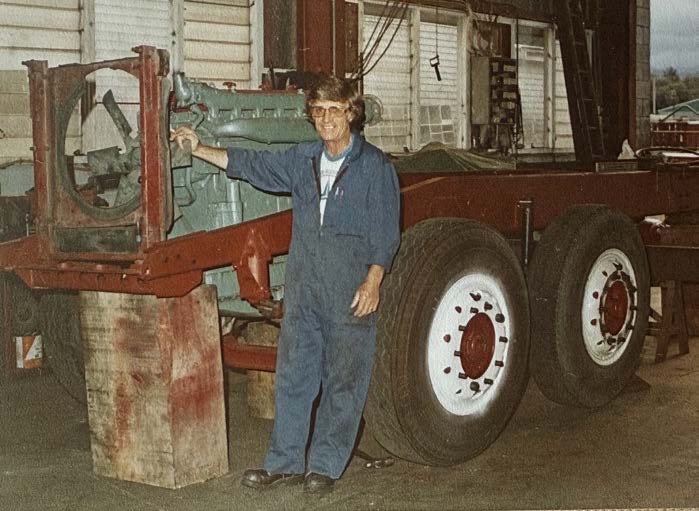
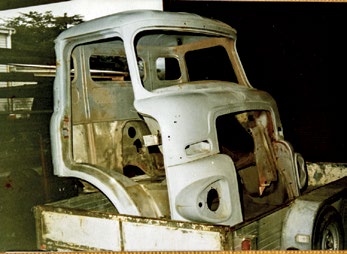
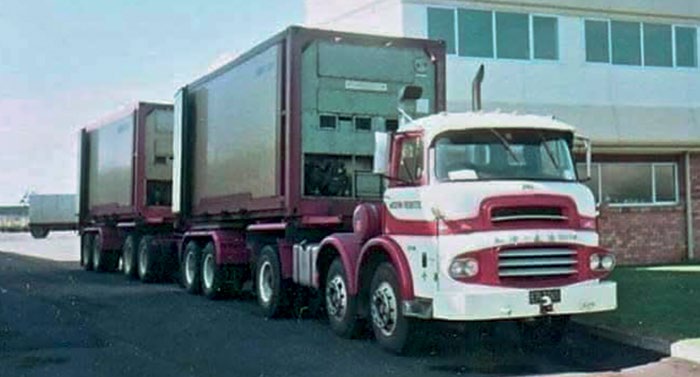
Mark says Ray Wootton (who transferred to the Christchurch depot just before Mark started working for Modern Freighters) and workshop manager Dave Reyland did the bulk of the work on the rebuild, which took about three years. The cab was too damaged to be saved, so it was replaced, and the aluminium fridge body had corroded away.
“The truck was completely rebuilt. It had a new cab, a 16-speed Spicer gearbox was fitted, and the chassis rejoined where it had been cut to get it out of the ferry.”
Mark says the gearbox from Octopus 2 was put into a Guy Invincible owned by Modern Freighters. “The rebuild was completed sometime in 1972 – it was finished by the time I started working for Modern Freighters in March 1973,” says Mark.
Rebuilding trucks was common in those days, mainly because it was difficult to source and purchase new trucks.
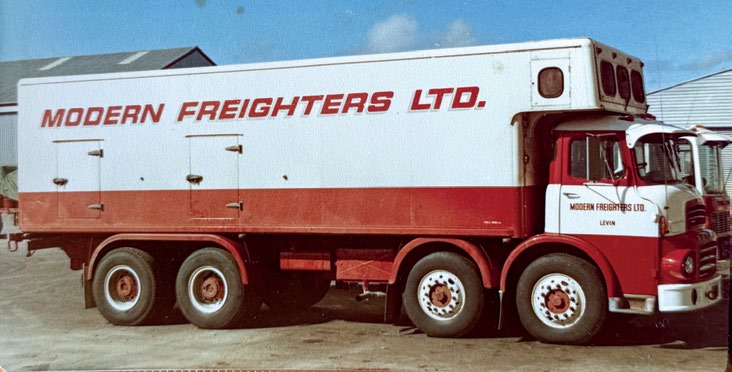
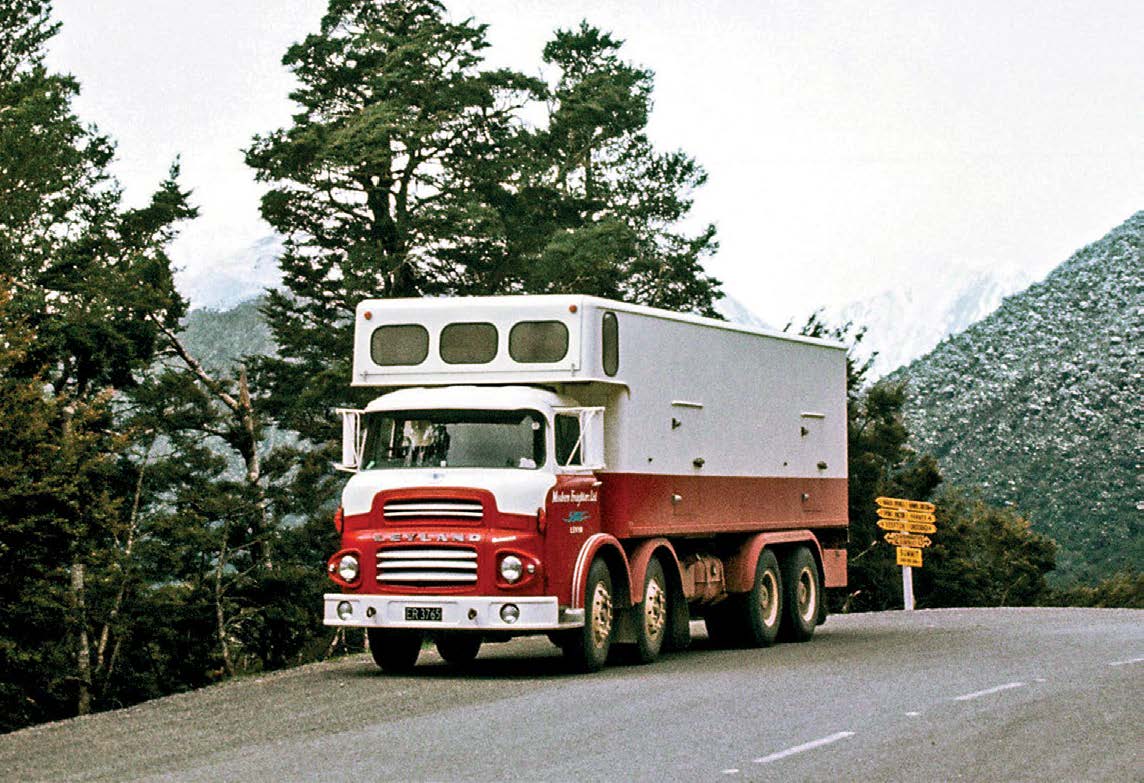
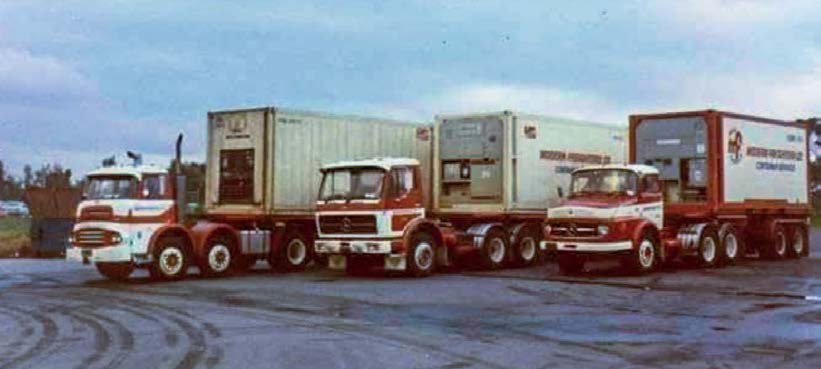
Rebuilding Octopus 1
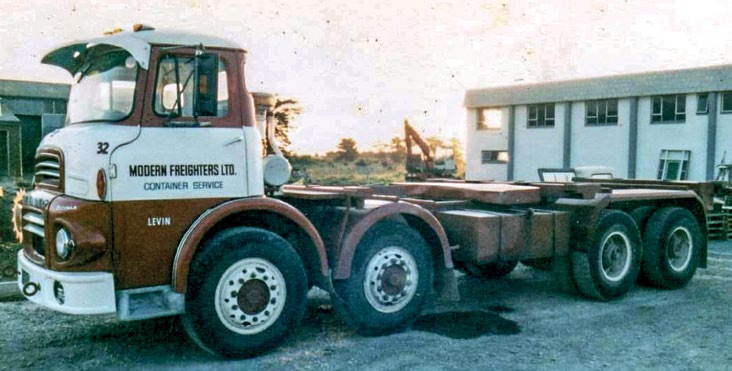
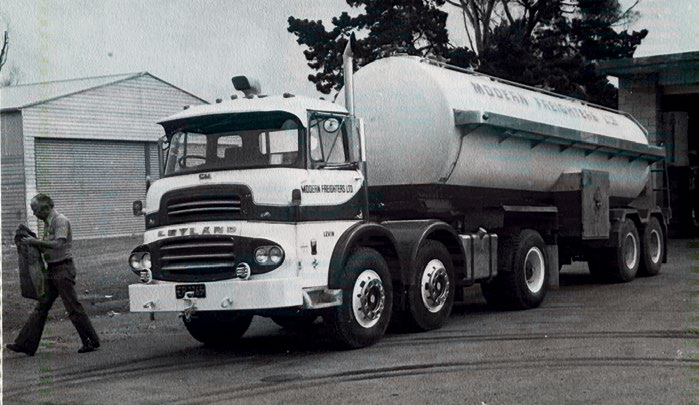
Don Tombs, who started working at Modern Freighters as a mechanic in 1975, recalls the company’s history and his involvement with the rebuild of The Wahine Octopus’ sister truck, Octopus 1. (Note it was not called an Octopus after the rebuild as it only had a single drive – Leyland Octopus are eight-wheelers.)
Octopus are eight-wheelers.) “I was told that the company started with an S Bedford truck and progressed from there to a very impressive fleet of Mercedes, three Nissans and several Leylands of different configurations, plus a Guy Invincible and others. The main depot was Levin, where we usually had four mechanics, a couple of apprentices, a tyre fitter, and in later years, a couple of engineers and a painter. We also had one mechanic at the Auckland yard and another at the Christchurch yard.”
Octopus 1 was driven by Brian Shirnack, who was the first driver employed by Modern Freighters. His cousin, Ross Peck (who supplied some photos used with this article), says he used to pick up frozen peas from Talley’s.
Don says while having contracts for carting frozen products, the company also picked up a contract to cart bulk yeast in a tanker out of Lion Breweries in Hamilton and Mangatainoka in the Wairarapa to be delivered to Kraft foods in Auckland.
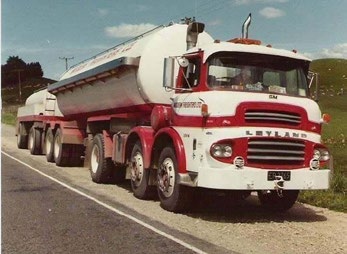
“A two-axle semi tanker and tanker trailer were purchased, but due to the fact that all the tractor units were single steer, the front tank on the semi tanker could not be fully filled as it was too heavy, so we needed a twin steer to fix the problem. Alan Reid was workshop foreman at the time, and between Peter Pollard and Alan, they decided to rebuild Octopus 1 into a twin steer, single-drive tractor unit – that’s how the idea was born.”
The rebuild took place in about 1978/79 and Don says it was very much a team effort.
“The Leyland Octopus was completely stripped down by the workshop team so everyone in the workshop, including drivers when they had a spare moment, got involved, and although it was to be a fill-in job, it still needed to happen ASAP.”
The cab and chassis, along with other components, were sandblasted and painted in Modern Freighters colours using Lusteroid two-pot paint. The chassis was then configured to the length the company needed and rejoined.
“All the panels and doors of the cab were repaired, and we cut a hole in the roof and fitted an orange-coloured caravan roof vent. The dash was fully revamped from the boring Leyland instruments to a large number of switches and gauges. We had gauges such as pyrometers for watching exhaust temperatures as well as gearbox and diff temperatures, plus other gauges for engine monitoring as well as engine alarms.”
The seats were altered and extra padding added before being recovered in new material by Kerry Woodmass, who was working for Len Shailer at the time.
“All excess holes in the chassis were plugged with the shanks of bolts, welded in and ground back, then reinforcing plates were added where required. This was the period of time when Mount Cook Landliner coaches were running V6 two-stroke Detroits with Allison automatic transmissions, while other companies like Car Haulaways and RFL were repowering older trucks with the same Detroit motors and Road Ranger gearboxes, so it was only natural that we should try the same,” says Don.
Don says everything was overhauled, including the front axles, steering box, diff and drivelines. All brake and air valves were kitted or replaced, and a larger radiator core was also installed.
“It had an electric fan clutch fitted to the engine fan so it could be manually turned on if required and also an air throttle set up, plus a lot of other extras. A Roadrunner fuel tank was also added.” Don says this was all in the days before the internet, so access to parts was limited.
“A lot of things we did came from ideas from different people, one of which was the chrome GM badge on the front of the cab. We took the chrome COMMER letters from the front of a TS3 Commer cab, used the C and parts of one of the M to make the letter G and then the other M, which was then attached at the front of the cab to make the GM badge.”
Don says that once complete, the Leyland could have been mistaken for a KW cab, something he says was a lot of fun.
“On the first test run in the yard, we found we had 15 reverse gears and three forward gears, which proved interesting when backing. Everyone presumed the rear diff flange turned the same way as the front diff input flange, but it didn’t, so the diff head was removed and turned over 180° in the housing, which fixed the issue.”
Don says all the work done on this unit was by Levin locals. “From what I can remember, the painting was done by Burchmore, either by Buck or Ken Edwards, who was our painter in later years. Some wiring was done by Ken Mason from Winstanley Auto Electrical, and all the upholstery was done by a team at Len Shailer.”
The rebuild took several months and a lot of hard work, and Don says once the tractor unit was finished, he was lucky enough to take it on the test drive. “I drove it to Palmerston North for a full wheel alignment, making sure everything was working correctly, and that included using the Jacobs engine brake on every corner I came to because it sounded so nice, particularly with that GM two-stroke sound.”
He says the Modern Freighters workshop team and all involved did an amazing job on the rebuild. “Warren Fairhurst, known as the Yank [he came from Canada], was using a 1924 long-nose Mercedes hauling the tanker already. To his delight, he was assigned to drive this unit, which did a lot of trouble-free miles with only a few minor issues.”
Investigating the story about the truck that was salvaged from The Wahine and rebuilt had more twists and turns than a mystery novel. Some questions remain unanswered, such as who the driver of Octopus 2 was before the sinking and why he did not travel with the truck when it went on the ferry. We don’t know what happened to the truck after Modern Freighters ceased trading, either. Mark says that several years ago, a friend said he had spotted the truck – then with the registration FY8821 – in a yard or quarry in the South Island, but he’s not heard anything further. Nor do we know what happened to the company’s third Octopus. If you have more info on any of these – or anything else interesting to share about Modern Freighters or its fleet – feel free to contact editor@nztrucking.co.nz.