

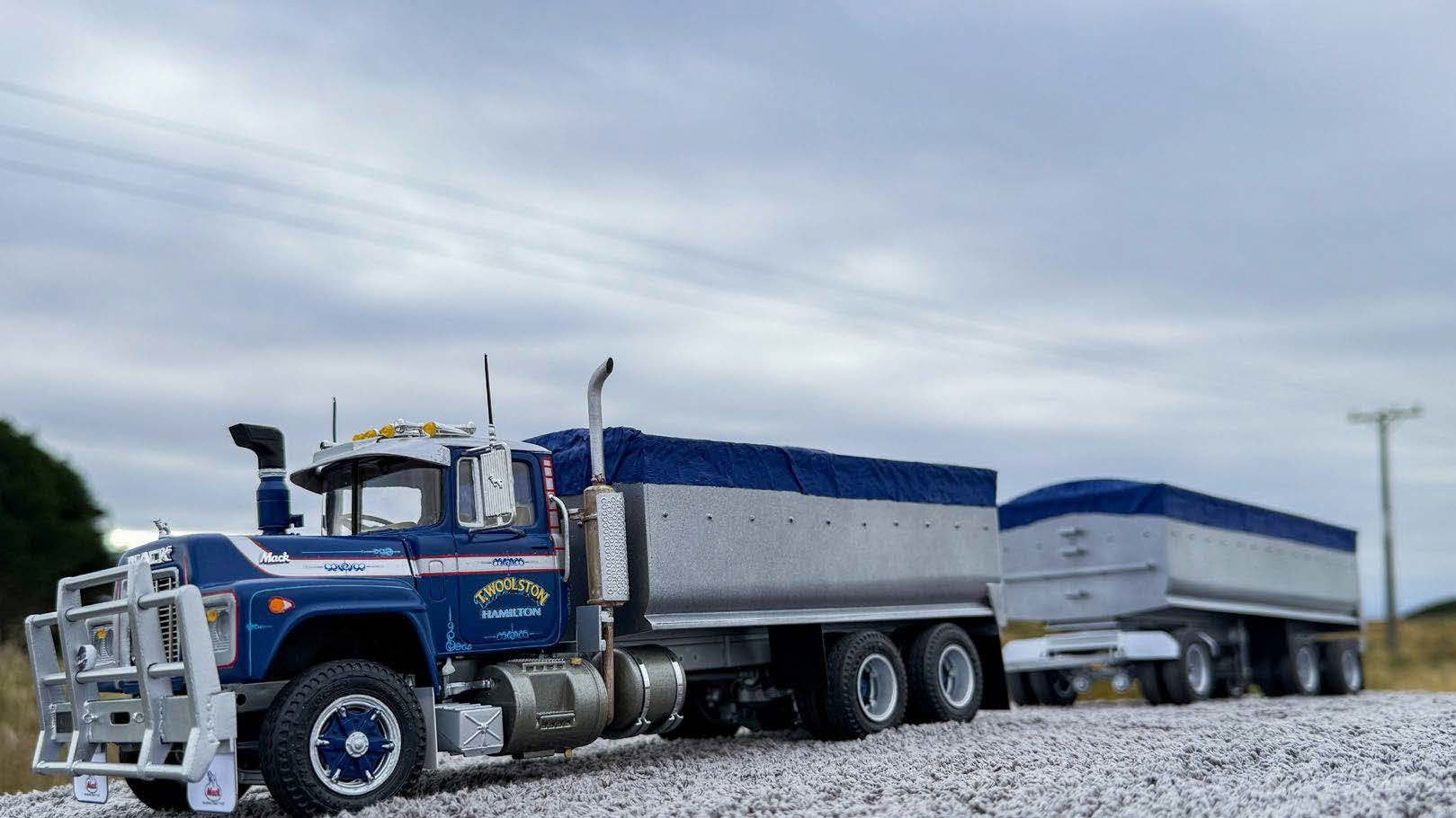
When assembling a model truck, you dedicate considerable effort to ensure accuracy and detail. Similarly, the same level of care and attention should be applied when photographing your model. This approach will help you capture a more realistic and impressive image.
Displaying Torquing Bulldog at the Wheels at Wānaka show at Easter, I had a chap ask me how I managed to get the realistic-looking photos of the completed model. He was convinced that we had applied some Photoshop magic to the images we printed in the Mini Big Rigs article, published in the March 2025 issue of New Zealand Trucking. I assured him that no, they were 100% raw images, with just a little time and effort placed on setting out the layout of the frame before opening the shutter on the camera.
With this conversation fresh in my mind, I thought it might be beneficial to discuss how I go about taking my photos, as well as show a couple of behind the-scenes images that give perspective to my approach. And that, in one word, really is the secret: perspective.
The most common mistake is where perspective has not been considered. It generally leaves the model truck looking as though it has been teleported to the land of giants in the story of Jack and the Beanstalk. Everything looks oversized and out of scale. Oversized flowers, foliage and landscaping materials are frequent offenders, all dwarfing the model truck and ruining the impact of the image.
I find artificially raising the model truck onto a surface where you can correctly place and align distant scenery within the frame is the first step. This also allows you to align the lens of the camera at the correct capture height; the height that you would effectively hold the camera at if the model truck was enlarged to life-size scale, and you were standing alongside it.
With this perspective in place, you can then start trialling a few test shots. Look for those giveaway items that can either detract or enhance your image – the likes of power poles, buildings and trees. Move your location as needed as well as the camera’s lens height to perfect the perspective and reap the rewards.
Give it a go and see how you get on. And please, send in your best images of your efforts and we just might print them here for the readers to enjoy.
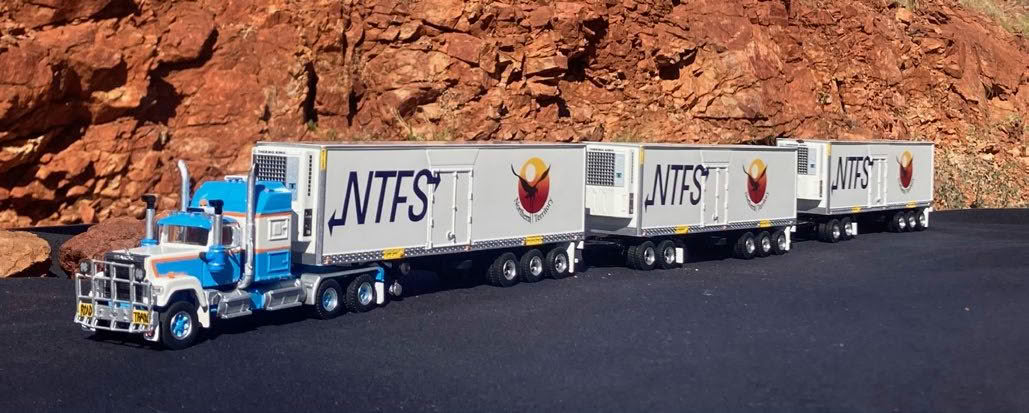
Above: A black towel on the roof of the rental car was the stage for the image that Craig McCauley captured at Churchill’s Head in the outback of Australia, re-enacting the 1987 Truckin’ Life magazine rig of the year poster shot of Neville Dobbs’ Blue Thunder.
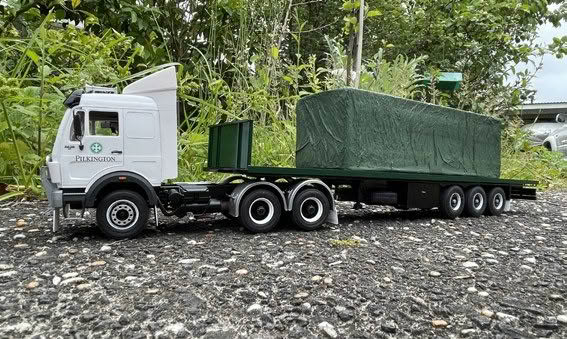
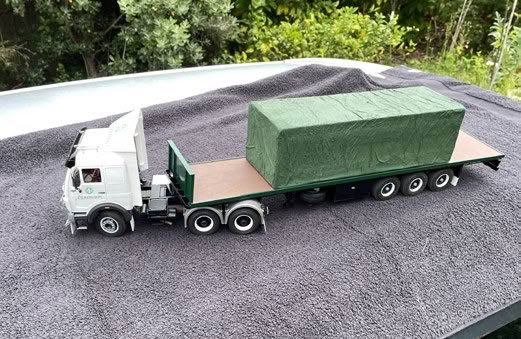
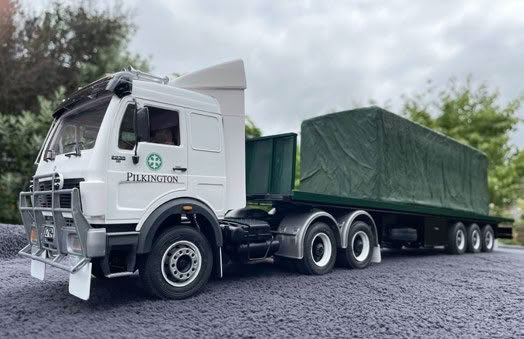
In the first image, the Ken Kirk Mercedes-Benz we built looks like it is lost in the Land of the Giants, oversized concrete aggregate and plant foliage all detrimental to the impact of the image. In the second image, you can see the roof of a parked car in the driveway, along with a simple grey towel. First lay the towel across the roof, then place the model truck onto this surface. Finally, fine-tune the lens height of the camera to acquire the most realistic perspective. Remember to look for out of proportion items in the background that might detract from the sense of realism.
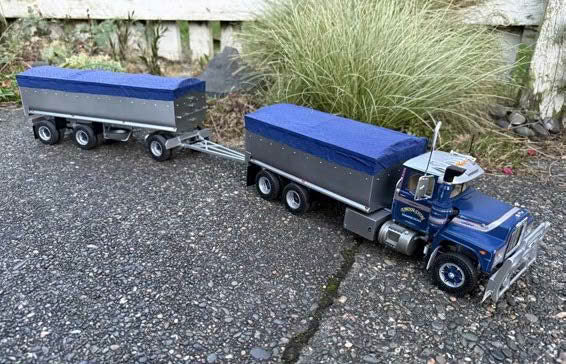
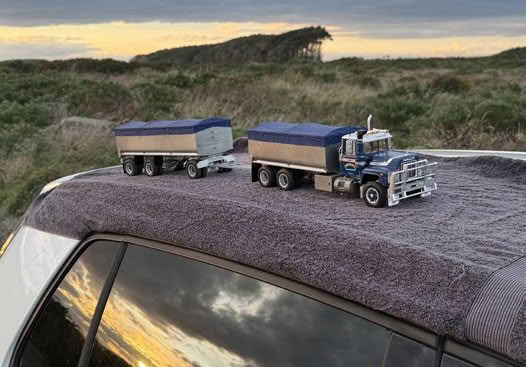
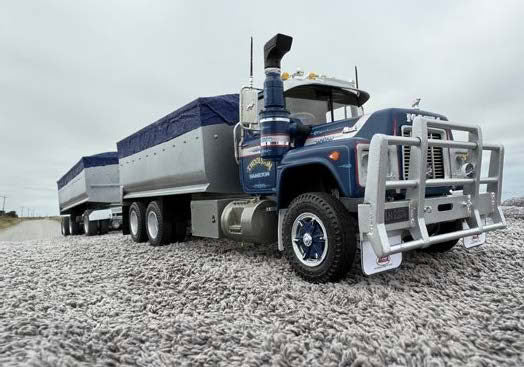
Again in the first image, I have purposely positioned Torquing Bulldog on the ground, replicating a novice angle of approach to taking a photo of a model truck. All the no-nos are in this shot, from an oversized sedge grass to the bottom of the Kiwi picket fence – not to mention the crack in the exposed aggregate concrete path complete with moss, not a good look. To correct this, I ventured out into the local countryside and tracked down a natural habitat for the truck. Once again, it’s using the roof of the family car and a grey towel to gain perspective, and hey presto, suddenly we have gone from novice model truck photographer straight to expert. We now have an image that resembles the real truck at work on a gravel road, complete with power poles running out to the vanishing point in the distance.
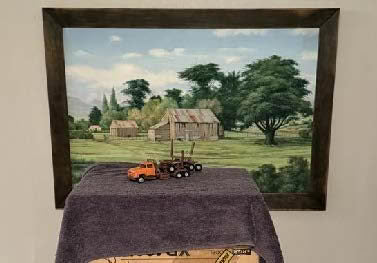
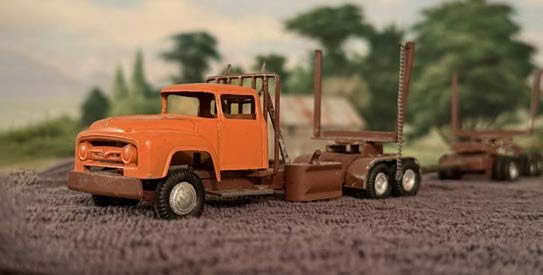
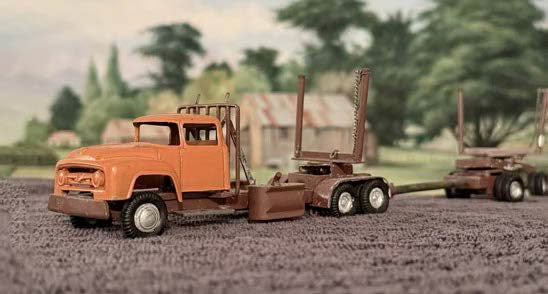
A tribute photo to dear friends passed – Pukekohe brothers Bruce Haines, model builder, and Brian Haines, artist. Your works truly endure.
As they say, there is more than one way to skin a cat. Here we are applying the exact same perspective rules as before. However, this time we are using an artificial backdrop. The painting is a lifelike representation of typical farming countryside from the 1960s, making the perfect backdrop to photograph the Ford V8 logger against. Using household items, I have raised the model into the lower third of the painting, then added the trusty towel to simulate the surface of raw earth. Another trick you can use when trying to replicate an older image is to use the editing features within your computer’s photo management software. Most computers these days have simple controls to adjust the likes of colour saturation. By lowering some of these levels within the software, you will achieve a more realistic finish, as seen here when you look at the second and third images.

Read more

Golden era glimpse
0 Comments8 Minutes
90 years of Fun Ho! toys
0 Comments5 Minutes
All go at Gore
0 Comments5 Minutes