
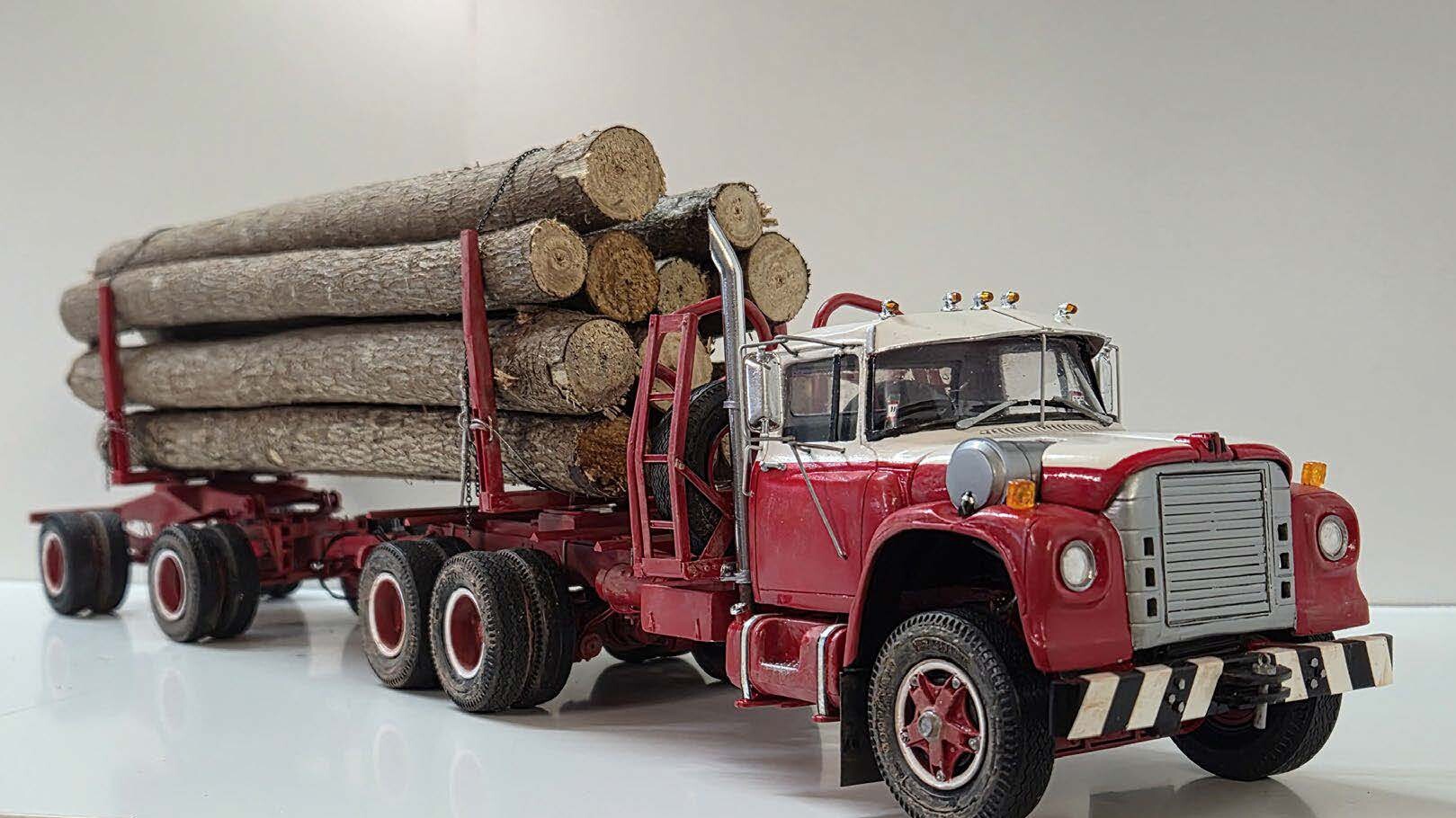
If the scream of a 6V53 Jimmy spinning through a 13-speed Roadranger, while whiffs of burnt diesel smoke blended with the sweet scent of freshly downed Radiata Pine tickles your nostrils, looking over Gordon O’Riley’s latest build is a real memory stirrer.
For avid model truck builder Gordon O’Riley, the 1970s and 1980s were the glory days for all things logging and logging trucks. Local sawmills hummed to the sound of local product being processed by a local workforce. Simpler times, where local industry was oblivious to the coming age of profit driven big corporate accounting.
Throughout this glorious era, a plethora of truck brands from all four corners of the globe clambered and crawled the forestry roads of our nation. Scammell Crusaders to R-model Macks, TS3 Commers to Nissan Jumbos; they were all represented. However, a hot favourite for many Kiwi operators was International. And there were many model variants from the International Harvester stables to like. Butterbox Accos, 3070s, as well as early T-Lines, have all earned the respect of many fleets over the years, but in among all those cabovers were some extremely cool conventionals, and a standout amongst them was the F1800D.
RG Woolston Logging Contractors of Rotorua was one such operator that had a varied fleet of Internationals at this time. And the iconic F1800D, running Mills-Tui logging gear, featured in this lineup. “They were a cool-looking truck in a real cool era of logging here in New Zealand, and they were big gear in their day as well, running 6V53 Detroit Diesels and Roadranger gearboxes. They were right up there with the LW Kenworths, Scammells and the others that were available back then. I have built a few loggers from this era now, so when I saw these F1800D cabs offered for sale on Facebook, I just had to grab some and add to this collection,” says Gordon.
Starting with a scrapped AMT Kenworth chassis from the spare parts bin, Gordon modified it to suit the International’s cab and bonnet. This included fluting the rails to mimic the layout of the International, allowing the 6V53 Detroit Diesel to sit low between the rails. “It was a real squeeze, that’s for sure, because the rocker covers on a 6V53 are so much wider, and you have to also accommodate the Donaldson Cyclopac air cleaner that sits on its side, and into the guard and through the bonnet.”
Running gear was next. Using an AMT 8V71, Gordon chopped it down to a 6V, modifying the rocker covers at the same time. A Roadranger was added, with Hendrickson walking-beam suspension and a set of Rockwell axles also joining the build from out of the spare parts bin. Details like brake pots and associated plumbing were added, with the steering box and linkages modified as required to fit the correct location. The rims are from an early Ertl International S-Line kitset, with an Ertl International Paystar kitset offering up its diesel tanks to the build.
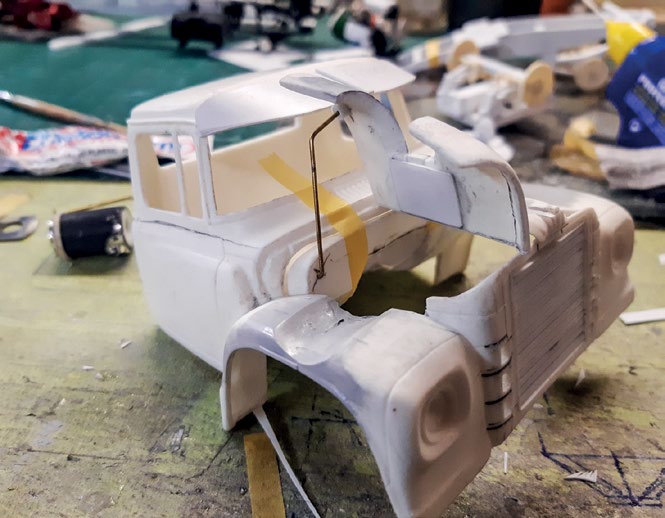
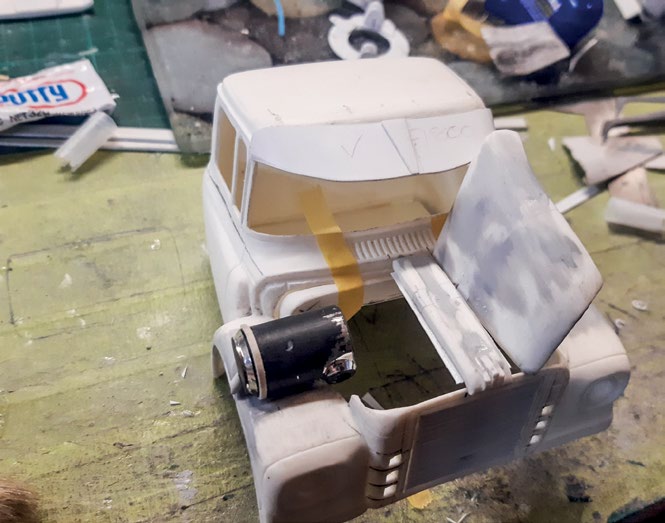
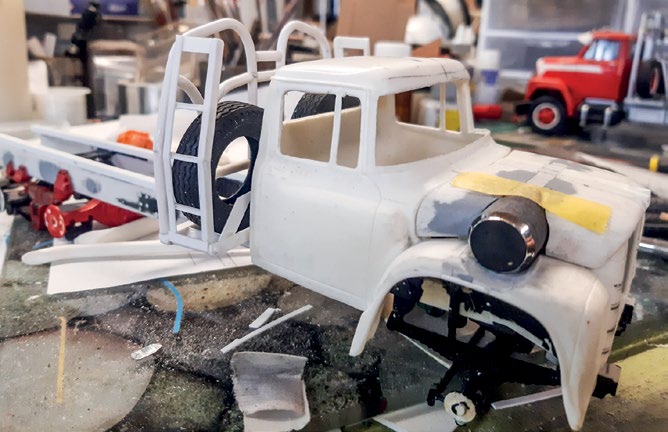
Working with resin cast cabs is a delicate operation, but you can still gently mill and machine the resin into shape, just as Gordon has done here, fitting the period correct Donaldson Cyclopac air-cleaner into the guard and through the bonnet. Note the bonnet stand that Gordon has folded up out of a light-gauge steel wire.
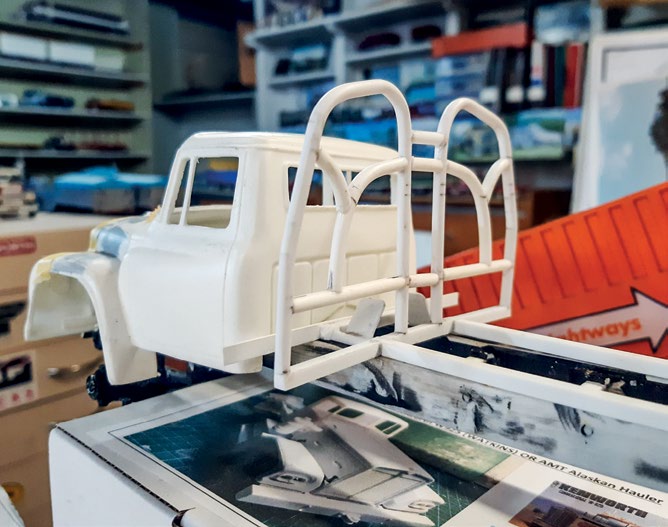
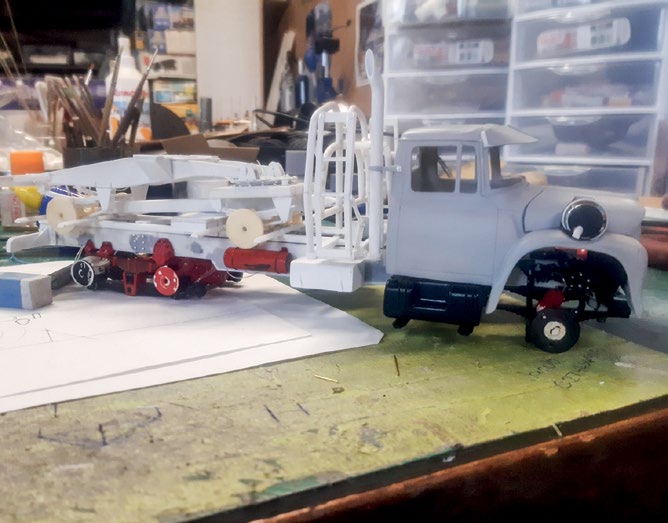
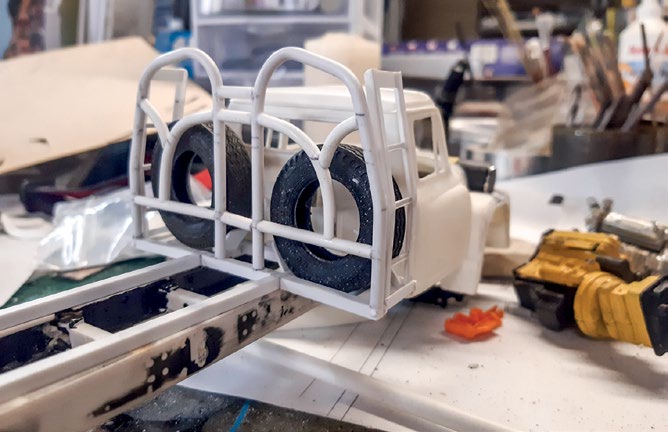
In the era that F1800D Internationals clambered through the forests of New Zealand, unreliable cross-ply tyres were your only option, so carrying a couple of spares on board was a must. Here, Gordon has, by using old photos, replicated the combination headache rack/ carrier arrangement that was at the time fitted to RG Woolston trucks. The attention to detail is impressive, including operating retainer ramps.
Working from old photos, Gordon drew to scale working drawings of the old-skool Mills-Tui logging gear and two-axle pole jinkers that were all the rage at the time. From these drawings he set about scratch building from styrene plastic a period correct combination. This included the finer points like the wire rope bolster retainer mechanisms. The attention to detail is outstanding.
The old F1800D existed in an age before steel-belted radial tyres and mobile tyre service. Unfortunately, cross-ply rubber was your only option, and these were notorious for self-destructing at the most inopportune moments. A couple of punctures per day was not unheard of, so being prepared was paramount. So again, working from old photos, Gordon has replicated the combination headache rack/spare wheel rack behind the cab, complete with operating retainer ramps.
This build is nothing short of exquisite, outstanding and authentic. The application of the RG Woolston red and white livery is on the money, and with just the right amount of weathering, the rig looks like it has just completed its first day loading out of the Tarawera Forest. Yes, looking over this model, you can definitely hear the screaming 6V53 Jimmy as the Roadranger gets a double stab of the clutch and drops into the top of the low-box.
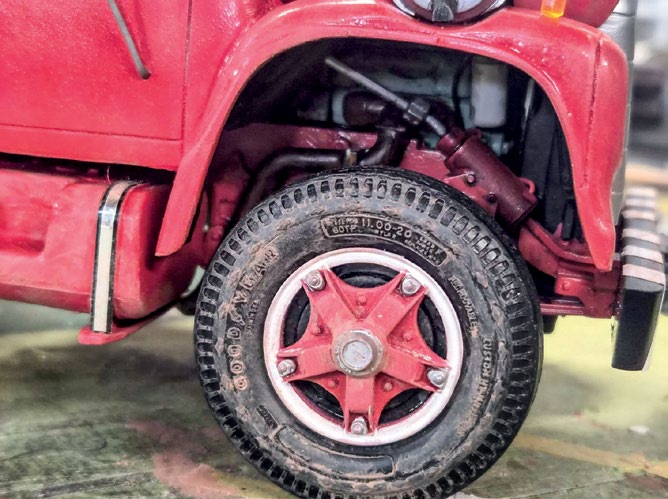
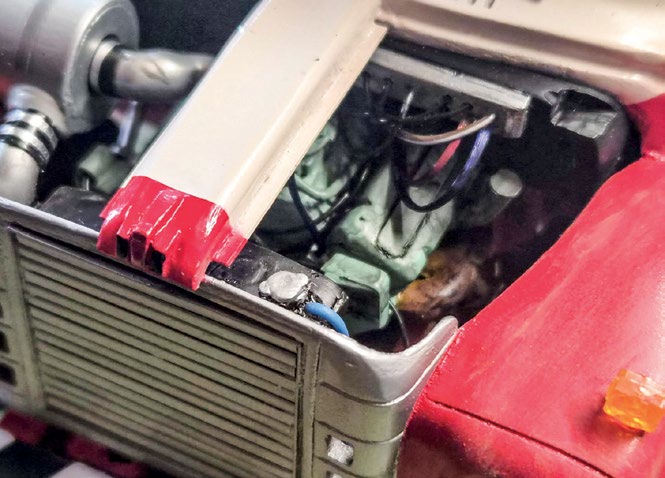
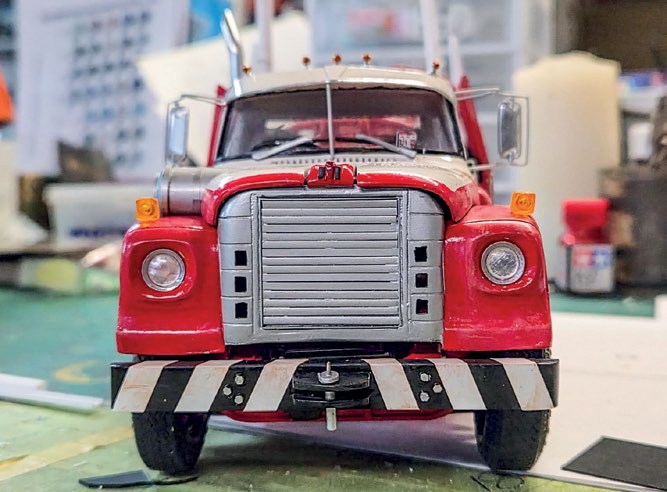
The application of the RG Woolston livery tops off this exquisite build, but it is the attention to detail in the smaller items that takes it to the next level. The likes of slightly weathering the build just enough to remove the ‘fresh out of the box’ look, modifying an 8V71 Detroit Diesel to represent a 6V53, plumbing the engine bay for electrical wiring and pipework, including the stainless-steel hose clamps, and not forgetting to mention the radiator cap.
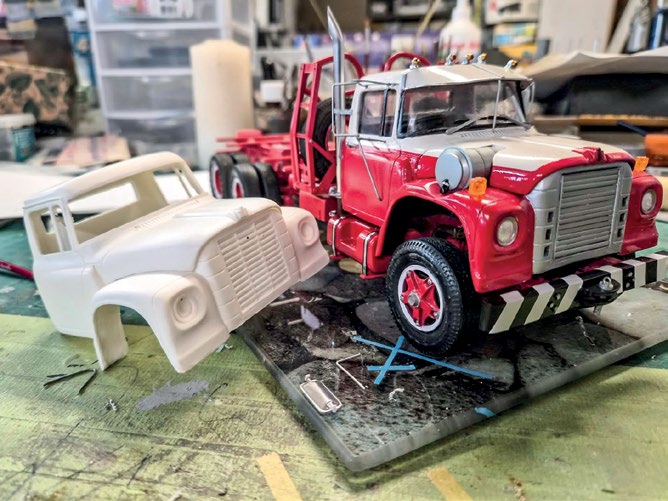
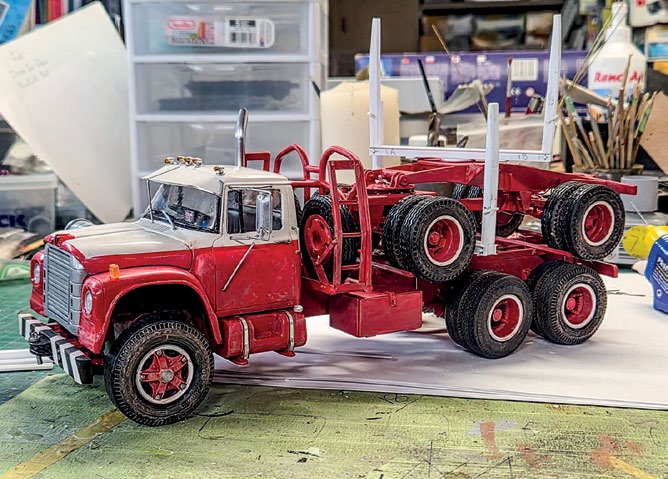
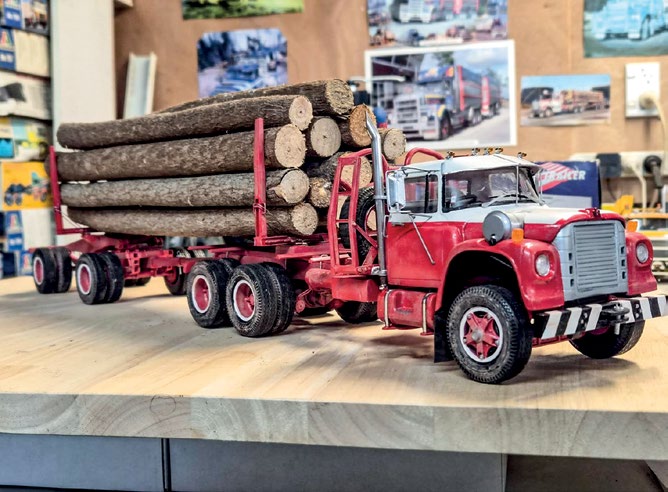
Looking back to the bare resin cab starting point Gordon had, it really is impressive to see the completed model standing proud with its load onboard. Gordon’s vision and technical ability to construct a complete truck and trailer from just a handful of images is outstanding.
Photos by Gordon O’Riley
Mini Big Rigs brought to you by: