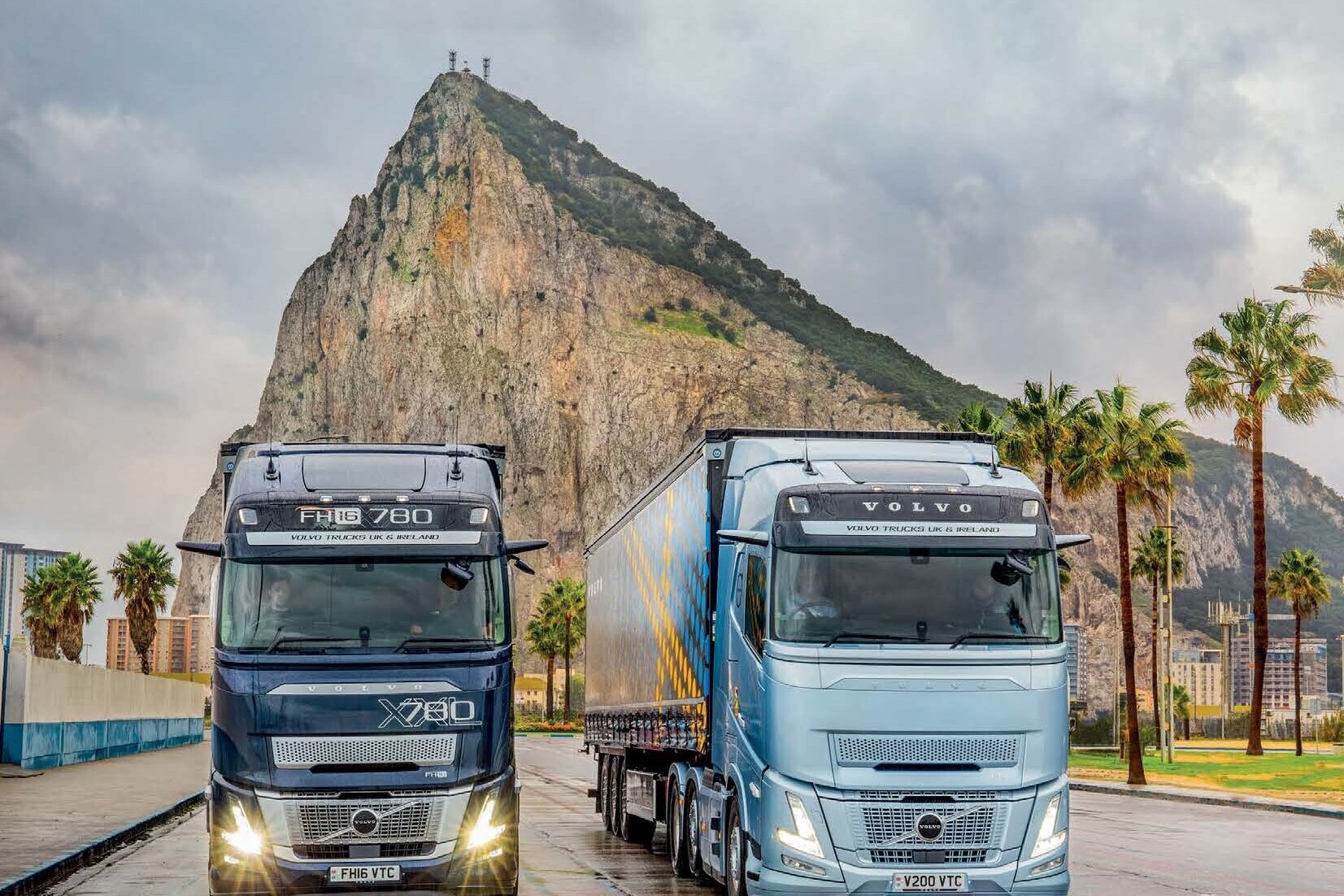


Recently, I had the privilege – and the frustration – of attending the 18th International Symposium on Heavy Vehicle Transport and Technology (HVTT18) in Quebec, Canada. I was one of three New Zealanders at Laval University for what is a global gathering of heavy transport experts, regulators, researchers and policymakers.
As my Kiwi colleagues and I reflected on what we heard, a shared feeling emerged: frustration. One of us, a long-time transport veteran, said he actually felt “despair”. That word hit home. We weren’t just disappointed – we were disheartened by how far behind New Zealand is falling in the area of heavy vehicle productivity.
At HVTT18, I chaired a session showcasing international developments in freight productivity, including what is happening in China, Australia and the Netherlands. One of the presenters, who is also an economist, said what’s happening globally is a “paradigm shift”. For years, the goal of higher productivity was mainly about economic gain. That’s changed. Now the shift is driven by economic, environmental and social necessity.
Meanwhile, back in New Zealand, the most recent attempt at change – the 2025 Regulatory Systems Rule Amendment (RSRA) – amounts to 41 small tweaks to Land Transport Rules. It’s not reform; it’s rearranging the deck chairs on a very creaky old barge. For example, while we’re still arguing over whether to remove the outdated yellow H plate from trucks, many European countries are trialling vehicle combinations up to 34m long and 74 tonnes in weight. High-productivity vehicle combinations are no longer a luxury, they are essential. They reduce exposure to crash risk, lower carbon emissions, ease pressure on the freight workforce and deliver economic gains.
The work of HVTT over four decades – particularly the performance-based standards (PBS) system – has made this possible. PBS uses computer simulation models to assess safety and infrastructure impacts of different vehicle designs. Without it, many of the large combinations now seen in Australia, Europe and even South America would not be permitted.
And that’s the heart of the issue. We are not just choosing slower progress – we’re choosing higher emissions, more congestion and greater cost. We’re ignoring global science and real-world experience that shows better ways to move freight.
It’s time New Zealand stopped treating productivity like a political risk and started treating it like the environmental and economic driver it is.
More drivers: Licensing reforms welcomed
Transporting New Zealand recently made a submission on proposed changes to the graduated driver licensing system (GDLS).
The suggestion is to remove the current full licence test and replace it with targeted safety mitigations. That is something we support. Not everyone does, with some people saying only having one practical driving test is a loosening of standards. But the evidence tells a different story.
New Zealand’s double-testing system – once at the restricted stage and again to gain the full licence – is rare internationally. Luxembourg, and the Canadian provinces of Ontario, Alberta and British Columbia, are about the only places that require a similar second practical test. New South Wales removed its final test in 2017, citing no evidence of improved safety outcomes.
Despite our supposedly more rigorous system, New Zealand still performs poorly. In 2024, young drivers aged 16-24 represented just 12% of all licence holders but were responsible for 24% of serious injury crashes and 22% of fatal crashes.
These rates are consistent with previous years and align with a worrying global pattern observed across 26 OECD countries, where young driver involvement in fatal crashes ranged from 13.4% to 32.3%.
Clearly, the presence of a second practical test isn’t delivering better outcomes. So what is more predictive of long-term driver safety?
According to the Ministry of Transport’s evidence: a clean driving record over time is key. This is the basis for one of the proposed mitigations – requiring a zero-tolerance driving history during the restricted stage.
Other safety measures include:
- a lower demerit threshold for novice drivers – just 50 points triggers suspension
- a zero-alcohol limit for all learner and restricted drivers
- enhanced oversight for driver training course providers by NZTA.
From an equity and access point of view, the numbers are just as compelling. There are currently more than 262,000 learner licence holders and 284,000 restricted licence holders in New Zealand.
Eliminating the final test – currently costing $98.90 for up to two attempts – would remove about $55 million in fees. That’s a meaningful difference for low-income, rural or young people, who are disproportionately impacted by licence access barriers.
The government’s economic impact assessment states these reforms will improve accessibility without undermining safety. Transporting New Zealand agrees. We are especially focused on ensuring these changes lead to a stronger, more available freight workforce down the road.