
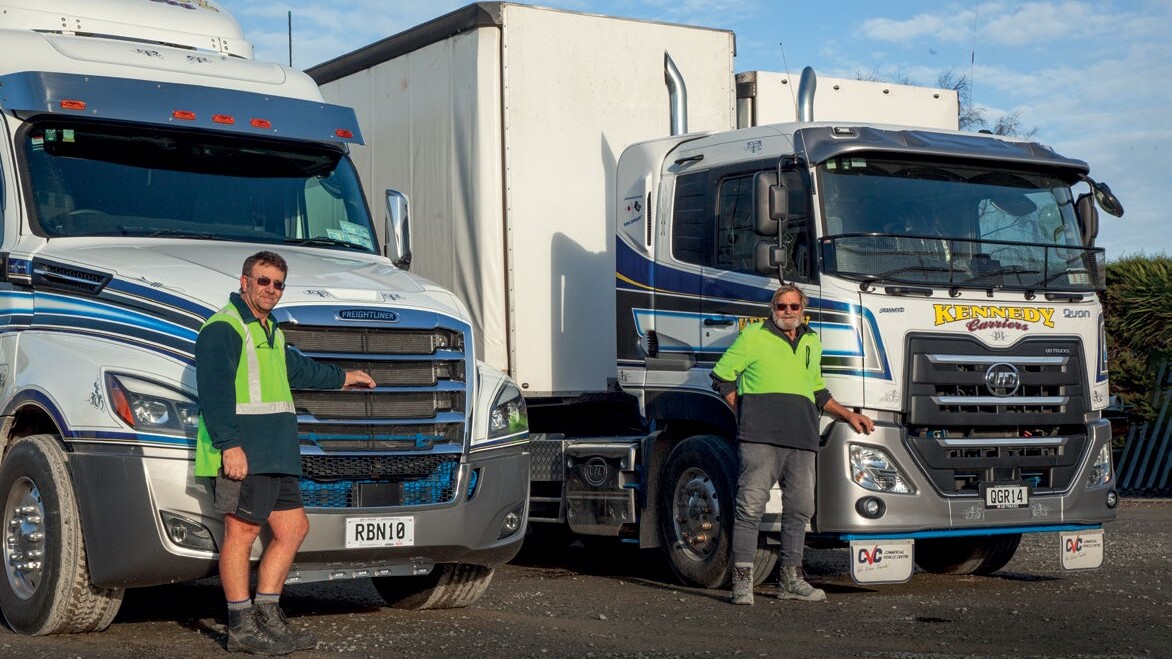
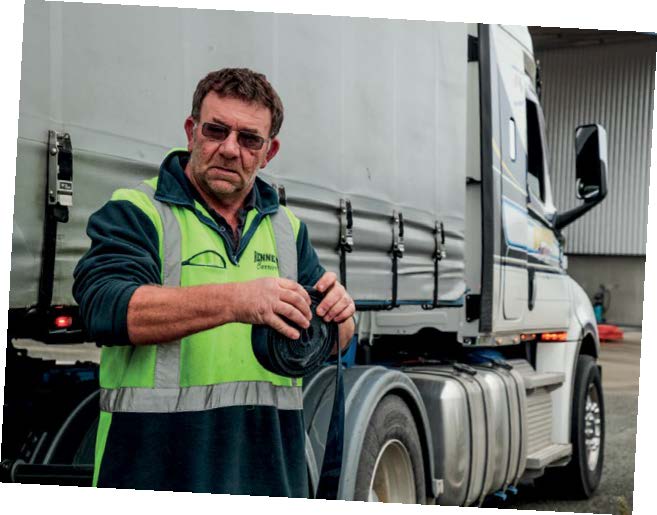
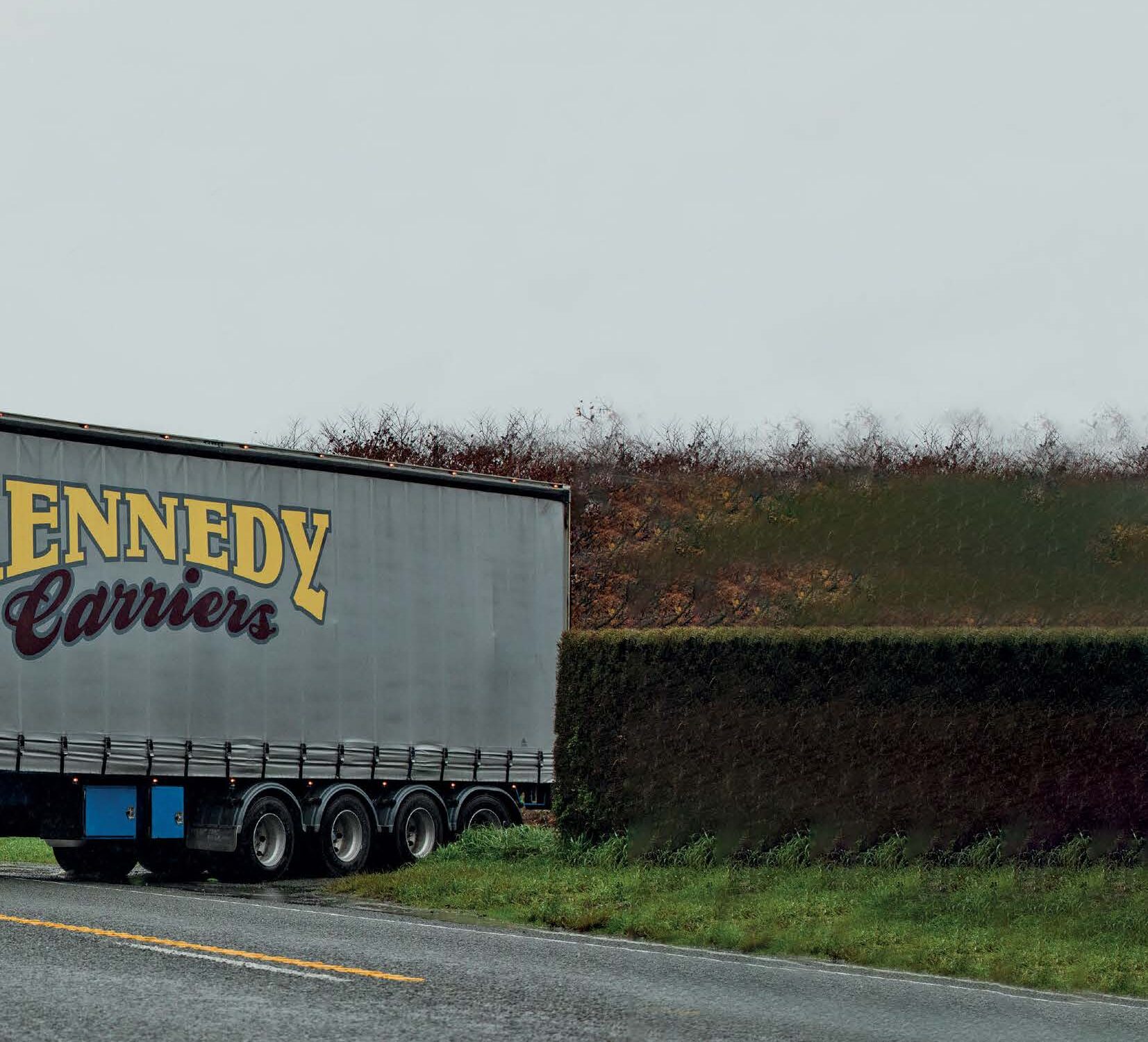
Photo above: The Kennedy Carriers duo, Jimmy (left) and Arch.
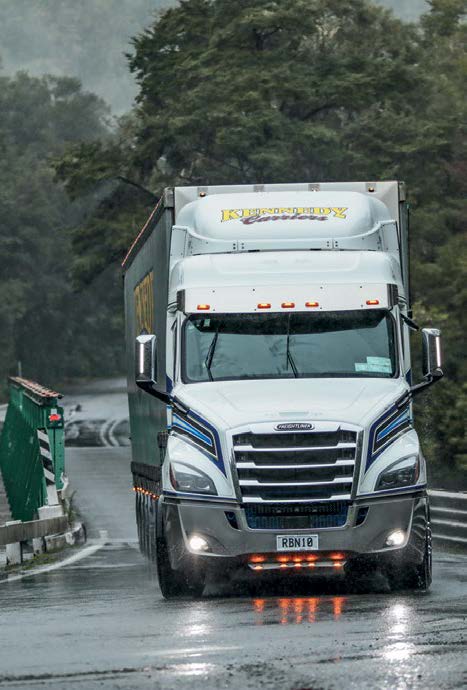
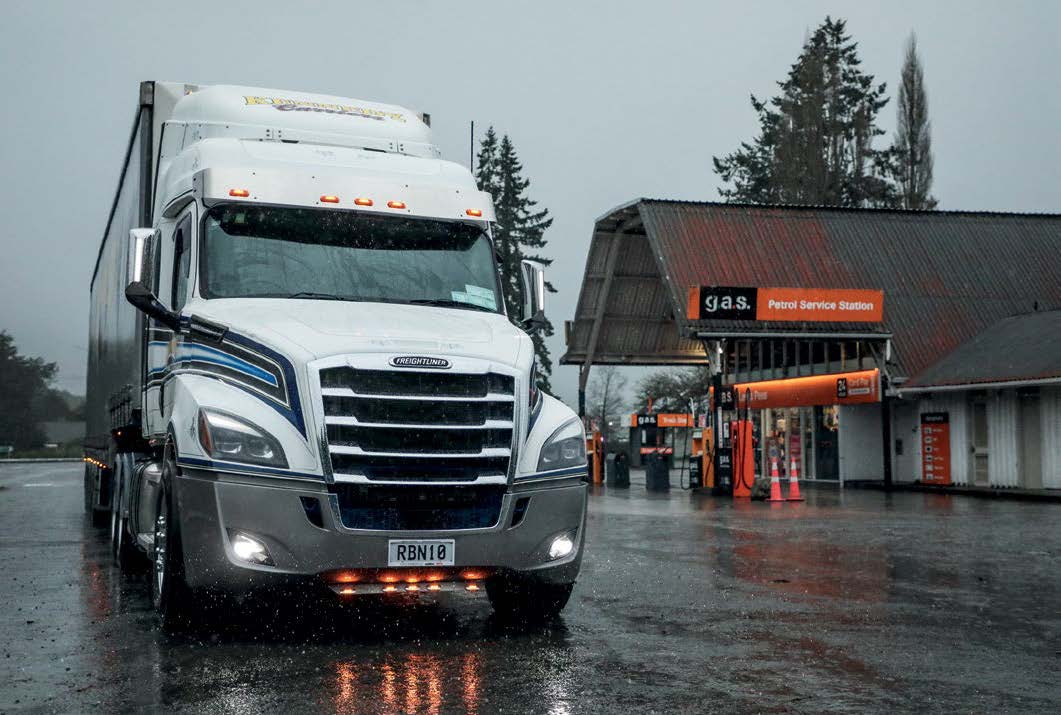
The Freightliner Cascadia has sat quietly in the background of Kiwi trucking since its arrival half a decade ago. That’s no reflection on the truck itself – it’s a fundamentally good machine – but rather the limitations of Kiwi-specific spec. Nonetheless, there are niche applications where it fits right in. Ōamaru-based family business Kennedy Carriers has proved this with its new Cascadia 126. It may seem like just a niche truck in a wee, niche operation, but this is more about what lies beneath.
The trucking industry never ceases to amaze. Beyond the variety of work and vehicles, it’s the people who carry the real stories – plugging away to quite literally keep things moving. Some do it to build something of their own; for others, it’s almost a life-long calling. Who’d have thought we’d find that all come together in a small family operation from Ōamaru?
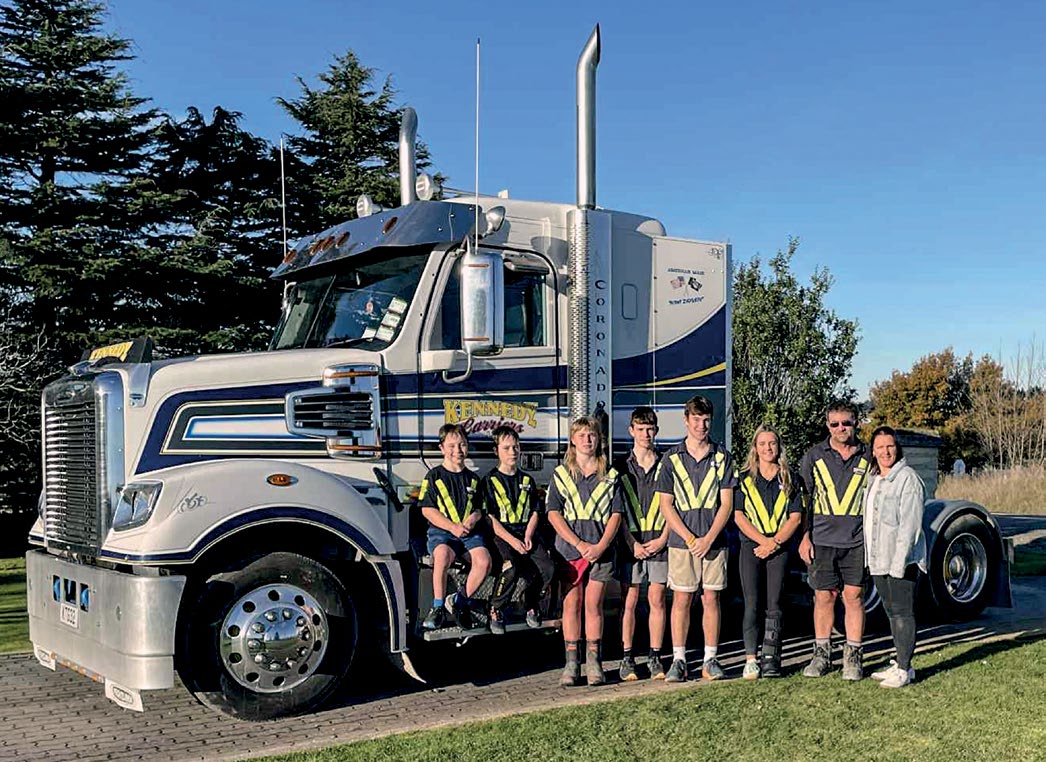
South Island operators may be familiar with Kennedy Carriers, but you’d be forgiven if the name only vaguely rings a bell. Patriarch Archibald and his son Grant – better known as Arch and Jimmy, respectively – are at the coalface, with mum Irene and Jimmy’s wife Aimee working behind the scenes. The family unit has been doing its thing in trucking for 26 years – quietly getting on with it, fostering loyal customer relationships and proving there’s still a place for such an operation in 2025.
And, almost as you’d expect of such an operation, they’ve been fiercely loyal to their chosen brands of truck over the years – UD and Freightliner. We’d seen their trucks out and about, distinctive in their blue and white livery, and there’s always been an element of intrigue. When Jimmy’s new steed – a Freightliner 126 36in XT Sleeper Cab tractor unit – was put to work a couple of months ago, we thought there could be no better time to introduce ourselves with the possibility of a long-overdue story.
“That’s quite an honour for a wee operation like ours,” Jimmy responded humbly. “I just like doing my wee thing; I never like to create attention. But it’s great for our customers, too. They’ve all been so good to work with and loyal over the years, so this is also a great thank you to them for all their years of support.”
Right there: our first of many insights into the Jimmy Kennedy way of trucking, doing business and fostering relationships.
Meet the Kennedys
The Kennedy family history is one of trucking. Arch’s and Jimmy’s early histories are detailed in Good yarns from the good old days (see page 28), and so we pick up the Kennedy Carriers origin story on the family farm…
“Dad always wanted to go farming,” explains Jimmy. “When he turned 40, he thought, ‘Right, this is the time.’ So he sold the trucks, but not the business, and went livestock farming in West Otago for 10 years. At that point, he sold up and bought another farm in Enfield, Ōamaru.”
In the meantime, Jimmy had left his first employer, Heriot Earthmovers, and moved back to Ōamaru to start running for Peter McDowell, known for his lightweight Freightliners – real hot rods. “It was a cool job – you’d see a lot of country. There was a good team of drivers when I was there. Unfortunately, that all fell over – but that’s when the opportunity to do this came about…”
A run north had come up for sale by Gary Hughes, who had an Ōamaru-to-Christchurch return general freight run, and Jimmy was left with a choice – go farming or go trucking. “I was in my early 20s … trucking was more appealing,” he says with a laugh. And so, in partnership with his mum and dad, a deal was struck, and Jimmy was trucking two or three days a week. Just a year later, another truck was bought for Arch to drive from time to time – though it wasn’t much longer after that, that the farm was sold in favour of working in the business.
In the early days, Irene managed the office work, but in more recent times, Aimee has come into the fold to manage that more and more. “I do my runs, Dad does his, and each week, the dockets go in for Aimee to put into the system. She plays a big part in it; she does so much for the business and the family,” Jimmy says.
Speaking of – young Ava, Chase, Vinn, Kipp and twins Parker and Beau are in the wings. We’re told that when they’re not out playing sports, it doesn’t take much convincing for them to jump on the forklift and whip things around the yard. “They’re between 17 and 10; love their sport, which is great. Like an old fella used to say, ‘If they’re into sport, then they’re out of court.’ I don’t know if one of them will follow into the business down the track, but it’s early days yet,” says Jimmy. Nothing wrong with that at all, though we suspect it may be in the genes somewhere…
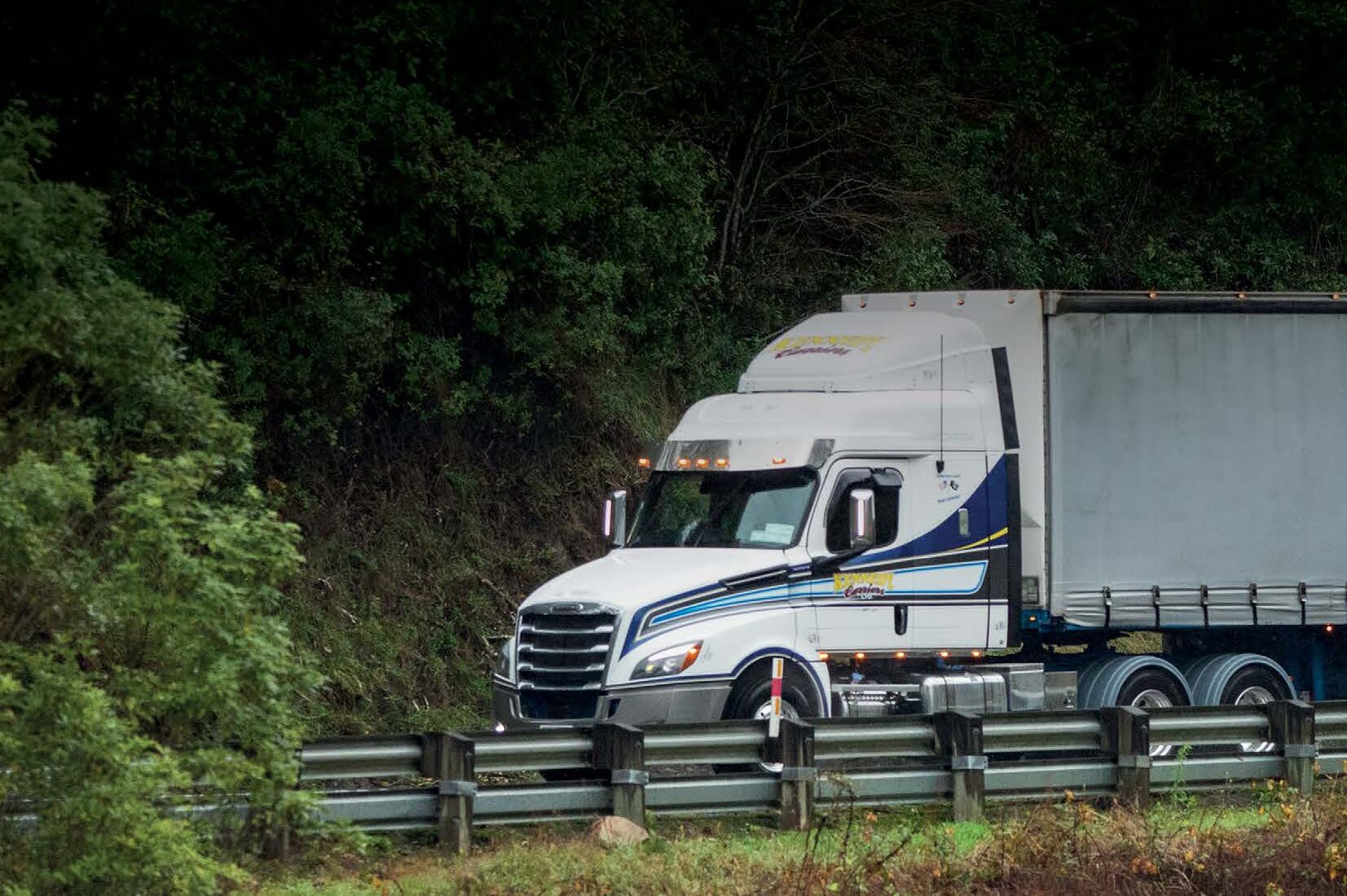
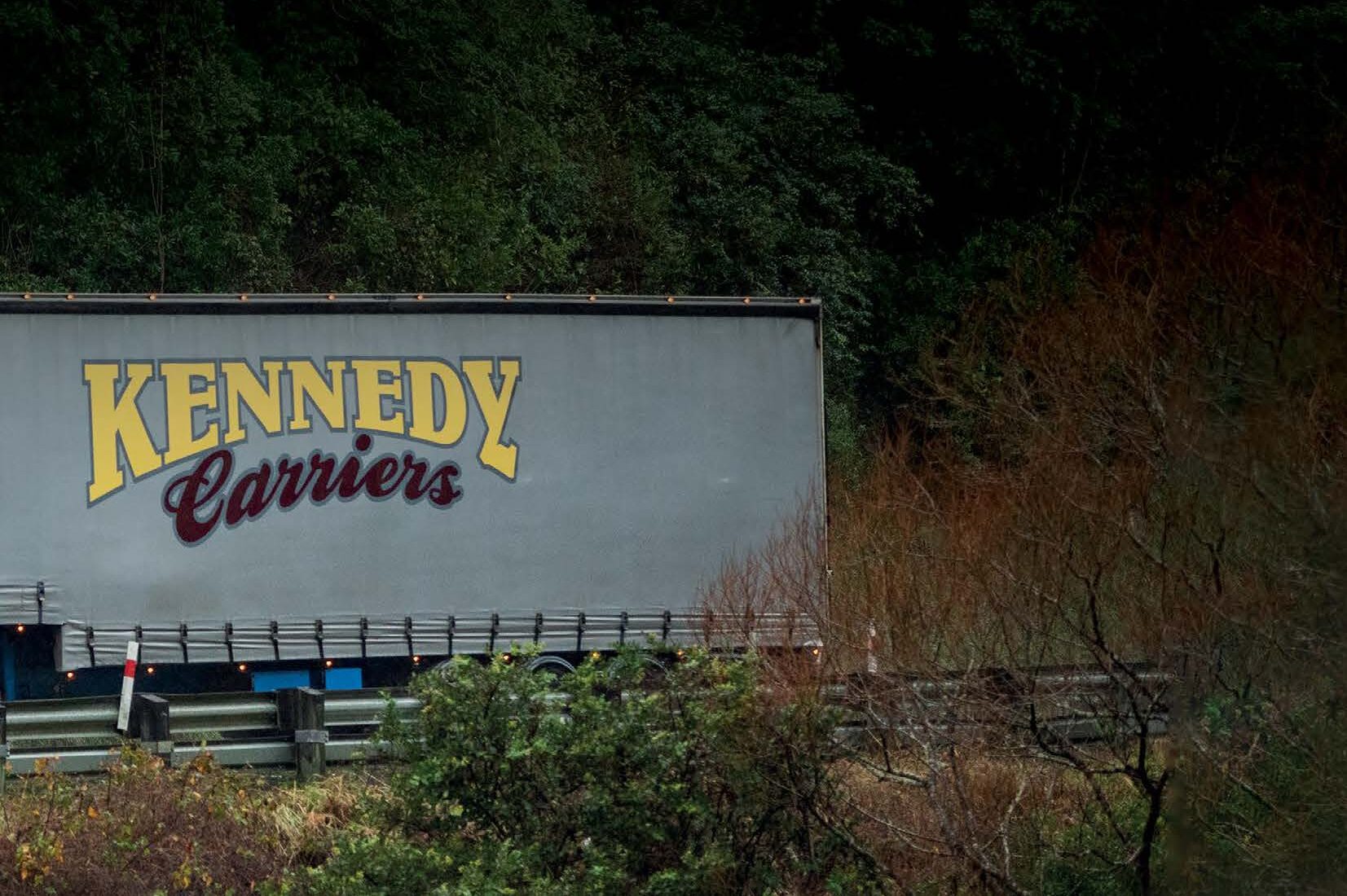
These days, Jimmy does a weekly set run that takes him to Nelson and back a couple of times, while Arch works five days a week locally. “Originally, Dad would run north as well once a week, but then I started running twice a week, so he now concentrates on local stuff. He still enjoys it, and he’s not under any pressure. My father-in-law Ross Cleveland is a semi-retired farmer in Enfield but used to have a transport operation years ago as well. He used to do the odd run up to Blenheim for us, too, and he’ll do a load now and then also,” says Jimmy.
“The country still needs us little businesses, doesn’t it?” he muses. “People still want to deal with someone they can have a relationship with. I think relationships count for a lot. That’s where we’re lucky because we have those great relationships. A lot of our customers have been with us for many years – a fair few since the early days.
“Sometimes, we’ll ring each other up, and then we’ll have to ring back because we end up just having a yarn. Or you unload and go into the office, and you don’t even talk work. A lot of our customers are actually friends; you form good friendships. That goes a long way, too,” Jimmy comments, adding this has been the core driver of growth over the years.
“We’ve never physically gone out to find work. The trouble is, if you do, you have to steal it off someone – so we’d rather someone come to us instead of us approaching them at a lower rate. We’ve chased up opportunities to make ourselves known, yes, but never wanted to get into the position we’re running around drumming up work.” And, with that, some more valuable insight.
The art of brand loyalty
“There’s really just the two of us, and we’ve got all these trucks!” Jimmy says with a laugh as we walk around the yard at Arch and Irene’s place.
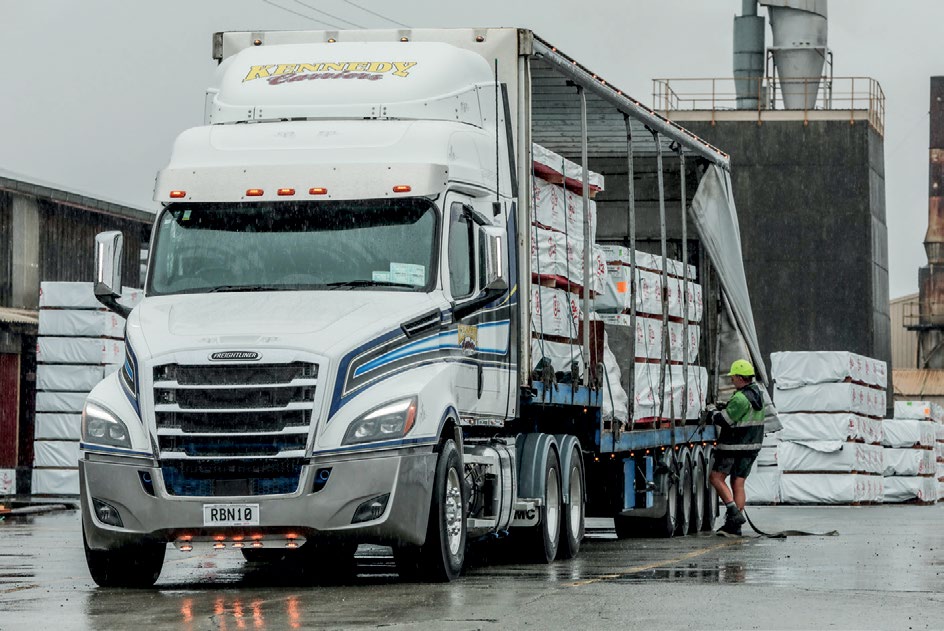
Backed under cover is Arch’s old 2014 UD Quon 26 470 in front of a bulk semi, and a little Mazda Titan flatdeck to its left. Sat alongside a set of sheds is a 1995 Nissan CM 200 4×2 flat deck – and there’s another in Christchurch for local deliveries. Parked proudly in the centre of the yard are the two quad-axle curtainside semi-trailer units that do the daily grind – Jimmy’s new Cascadia and Arch’s 2023 UD Quon 26 460.
“Dad loves his Nissans. We’ve always had them. We’ve had a good run out of them over the years,” Jimmy says. “Shit, yeah, good trucks,” Arch chimes in.
And parked up at Jimmy’s place, the 2017 Freightliner Coronado 114, in which he did 860,000km before the Cascadia arrived. “I love the Coronado. It’s a cool-looking truck. I bought that off Trevor McCallum, and it’s been real good. It runs a DD15 and 18-speed Roadranger and we’ve really done nothing major to it,” he says.
“We always like to have one spare – if something happens, we know there’s one we can hook up and take away. Not that we’ve ever really needed to. Only the Coronado was once off the road; five weeks waiting for a fuel pump.”
Jimmy began his association with Freightliner when he bought a new 2011 Argosy.
“That was a step up pricewise from the UDs, but when we sat down and worked it out, we were saving on accommodation. It was well worth it, and since then, I’ve just lived in the truck.”
Jimmy did about 700,000km in the Argosy before selling it to Scotty Miers at PTS with the arrival of the Coronado. “I liked the Argosy, yes. It ran a Series 60 Detroit with a Roadranger. Unfortunately, the day before I was going in to order the Coronado, it dropped a valve. It was out of warranty, so I held off the order to get it sorted.
“I’m a big believer that it pays to stick to the right people with your servicing, and unbeknown to me, I was on a Detroit ‘loyalty list’ because I bought the Argosy off Prestige Commercial Vehicles, and no one else had ever put a spanner on it.
“Detroit coughed up quite a bit towards a new motor, even though it was out of warranty, and they didn’t have to. It gutted me, actually, because apart from that and a few minor things, we had such an amazing run out of it,” he says, again hinting at the value of solid relationships.
It took a lot to get Jimmy out of his beloved Coronado. It was a two-year process for Keith Andrews sales exec Tristan Duffell to get the Cascadia deal across the line, but he succeeded when Keith Andrews announced the current model Cascadia was on run-out ahead of the arrival of Gen 5 Cascadia.
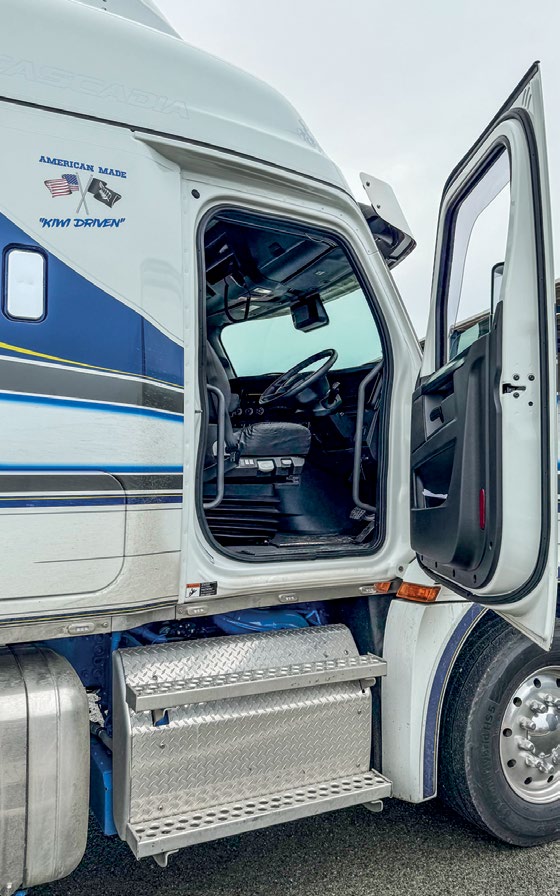
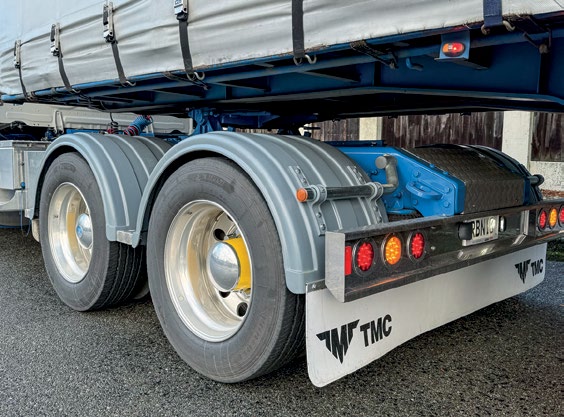
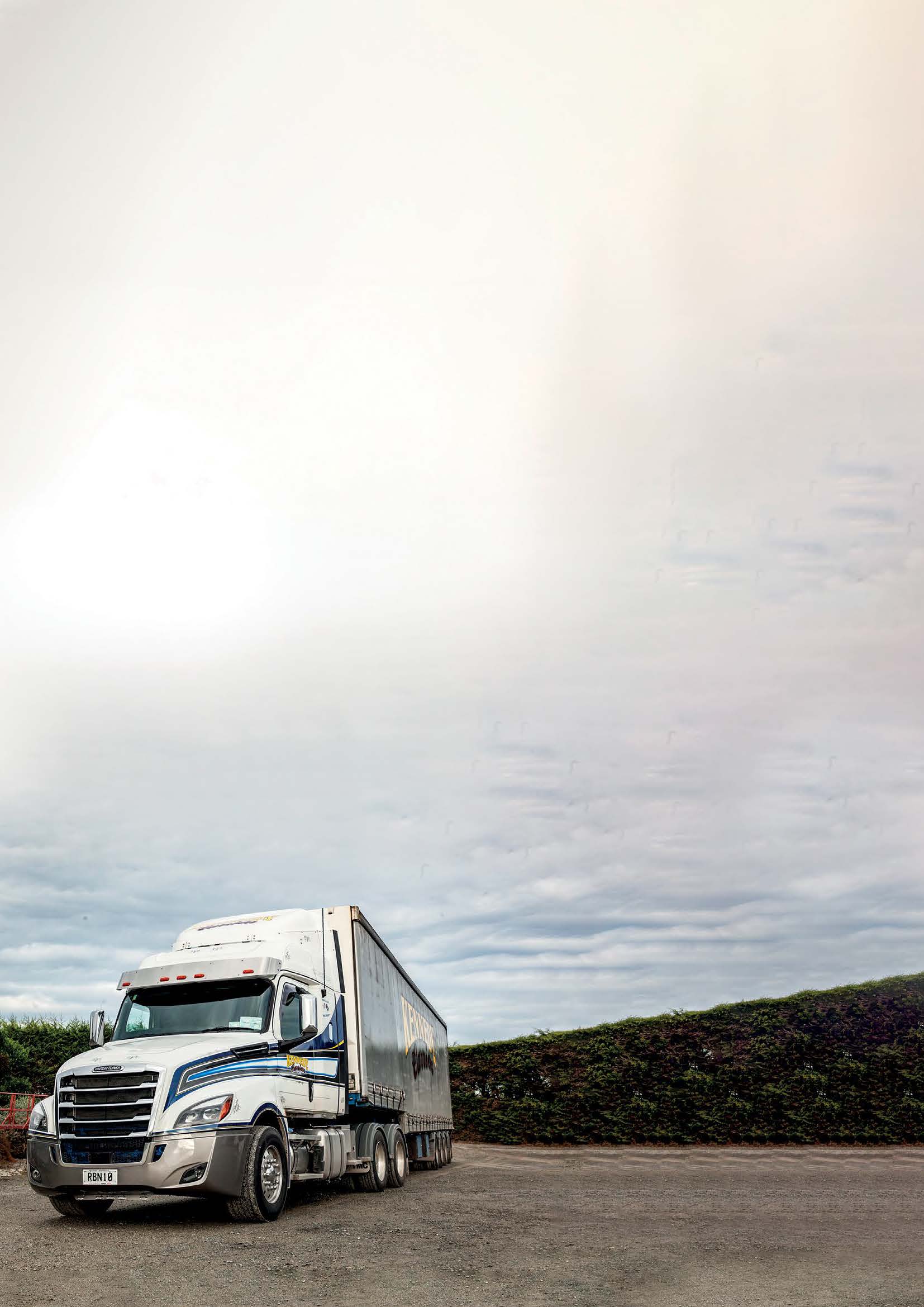
For it to couple up to Jimmy’s existing quad-axle semi, the Cascadia went off to TMC for its setup and permits, Rhino Guards, and about 400mm chopped from its rear end. Elite Transport Refinishers of Tīmaru then painted the chassis, bumpers and bonnet before Andrew Geddes at Timaru Signs and Graphix worked his magic.
At this point, you’re no doubt wondering why the bonnet was painted – but if you know the Cascadia, you’d have noticed Jimmy’s is missing a couple of appendages that some of them have, which we’ve come to realise don’t appeal to the Kiwi sense of aesthetics…
“I took it past Andrew, and he said, ‘Let’s just whip off one of those bonnet mirrors and see how it looks.’ It totally changed the look of the truck. Elite filled the holes, and you wouldn’t know they were even there. They are a very functional mirror, it’s amazing what you can see in them. But cosmetically … even Aimee didn’t like it. You wouldn’t believe it’s the same truck with the mirrors gone and the black bumper painted silver.”
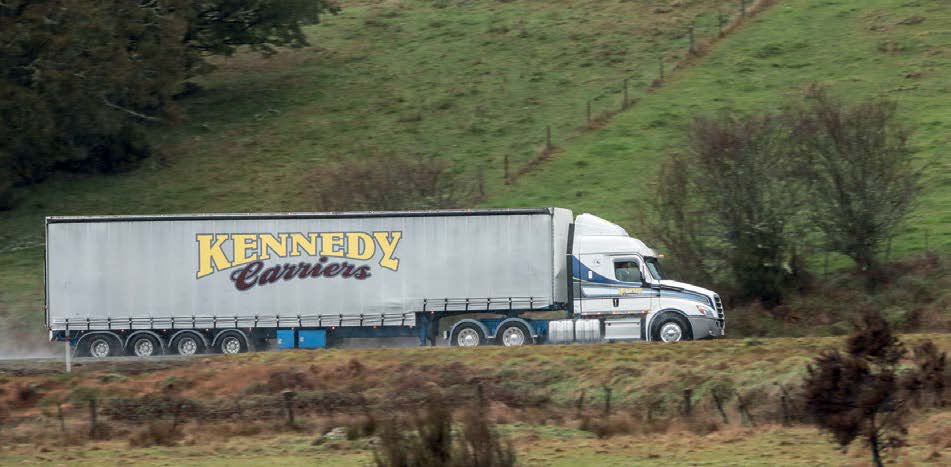
Fair to say, everyone’s done a stellar job, and the Cascadia looks just right in the fleet colours. With the sun on it, the detail is obvious – the striking metallic in the blue, the elegant detail in the scrolls. If the Coronado wore it with brawn, the Cascadia is debonair. And yes, it’s set up without stacks – though it doesn’t look like it’s missing anything: Cascadia is not that style of truck.
“It was either run it with the aerofoil kit on, or add twin stacks … and I love my stacks,” Jimmy says, pointing to a set that came off the Argosy at home on the CM 200. You know, the type of thing one does on a slow weekend…
“I like the new one. It doesn’t have the same coolness as the Coronado, but it’s got its own thing going. We haven’t tried to make it something it’s not,” he comments.
Hurry, don’t rush
Jimmy and the Cascadia had been on the road only about a month when we met him, and having driven 11,000km, the truck was still freeing up, and he was still acclimatising to it. Of course, the only way either of those can be accomplished is to rack up the miles, and a South Island freight run is just perfect for that.
Jimmy’s week goes something like this – Ōamaru to Blenheim via the coast, then to Nelson and down to Christchurch via the Lewis. Then it’s down to Tīmaru and back again before heading home for the weekend – an easy 2200km or thereabout. We joined the run at the start of his return leg from Blenheim to Nelson, Christchurch and then home to Ōamaru the following day.
“I try to tie it all in, so everything is just a nice flow. It takes you longer and longer now on the roads, so I just sit back and cruise, and it’s more enjoyable. I say, ‘I might be in a hurry, but never in a rush’ because that’s when you make stupid decisions.”
With the 15.1m TMC quad-semi hooked up, the unit is 50mm overlength, requiring a permit. “The semi is a bit close to the aerofoil, but it weighs up perfectly at around 21.5 tonne on the tractor unit, with 6240kg on the front axle, and almost 20 tonne on the trailer – so 41 tonne. I could permit it to 48 tonne, but the RUC on the tractor would kill me,” Jimmy explains.
Naturally, the question of running a truck and trailer unit has been posed. “For what we do, these just work really well. And we can chop and change if we need to, no need to take the whole unit off the road. It’s easy, simple, cost-effective, even if we can’t cart as much as a truck and trailer unit. It works for us.”
Being a curtainsider with a Zepro tail lift, the semi gives Jimmy the flexibility he needs for the freight he moves. And having made a delivery to OsGro Seed Services the night before, the first stop for us was the good folk at Eurocell Wood Products in Nelson.
“We’ve been doing timber out of Eurocell for eight or nine years – it was Heartland Prenail in Tīmaru that put me in contact with them. They’re real good, working with us and the customers to time loads, that sort of thing,” says Jimmy.
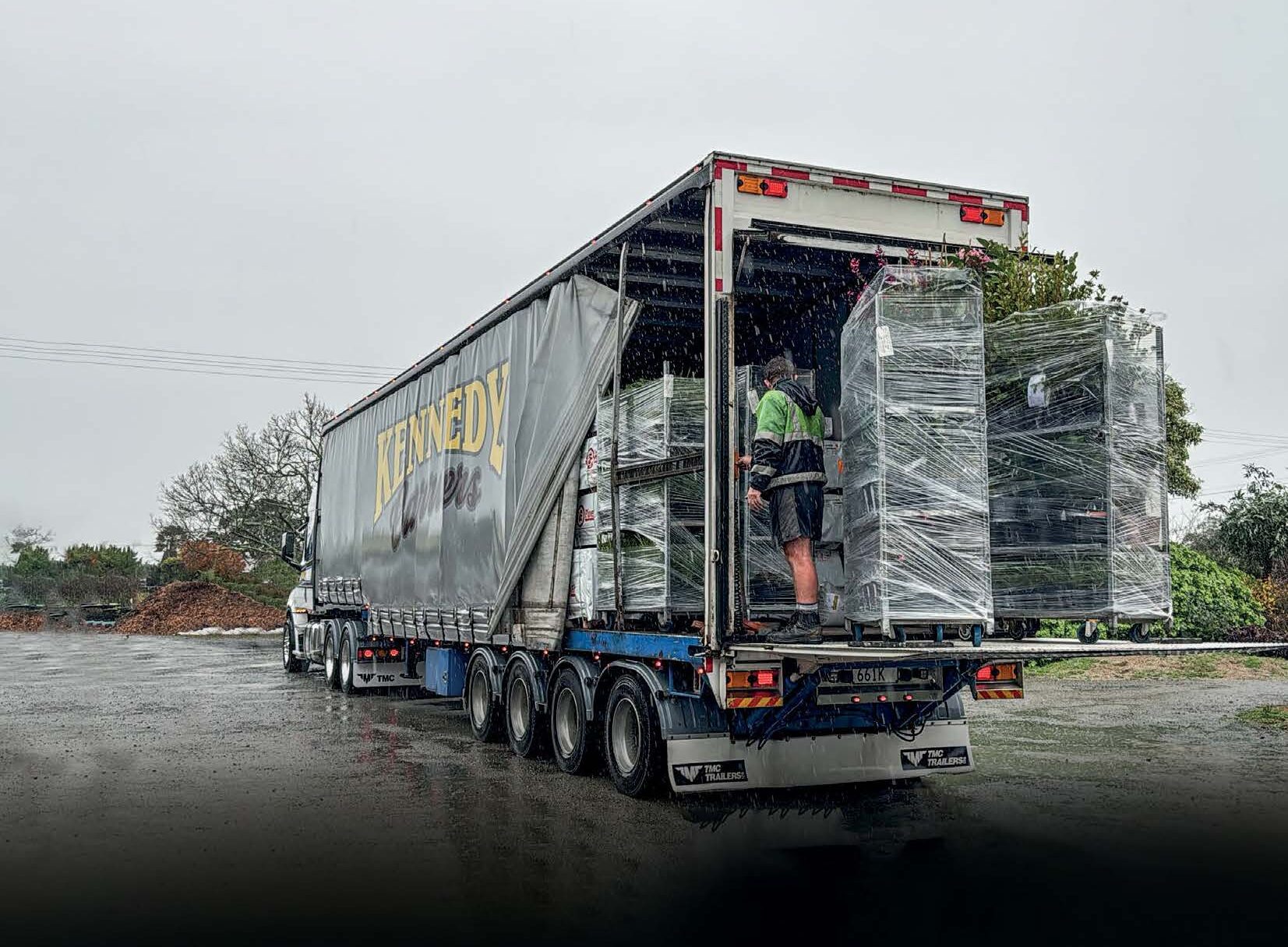
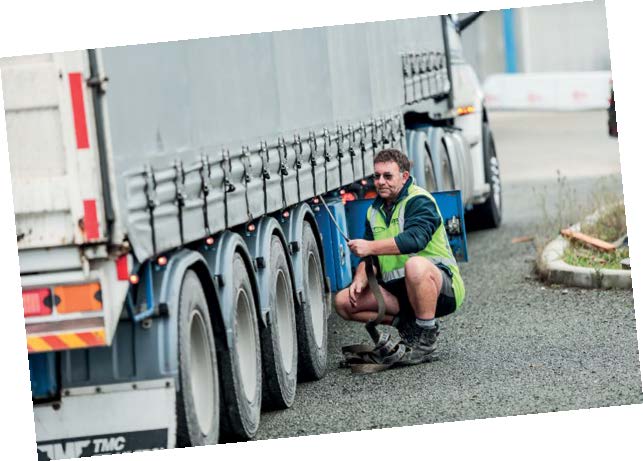
Jimmy pulls onto the concrete loading pad, and forklift loader Dean Cave sets about placing the 20 tonne of packaged timber bound for Heartland Prenail. The two men consult and then work smoothly and methodically, bit by bit, despite the pouring winter rain, which undoubtedly adds a point of pressure. It was ‘hurry, don’t rush’ happening right in front of us, and before long, the load was neatly positioned and strapped to the deck, the curtains were closed, and we were bound for Hope wholesale nursery Vibrant Earth, which has been a regular customer since day one.
By now, the intensity of the rain had increased, but the tail lift allowed Jimmy to quickly wheel five plant trolleys onto the rear of the unit. He was then onto the forklift to place eight pallets of plants atop the timber – all the while chatting but never once distracted. “You’ve got to be careful with plants in this weather,” he says. “You’d think they’re light, but it’s the wet soil that can push the weight up.”
The pallets were bound for Lushington’s Nursery in Ashburton, while the trollies would be dropped off in Christchurch on the way, where contract driver Dave Weatherley would collect them with the other CM 200 and deliver them around the city. “Dave knows plants because he comes from that world. He’s been with us about nine years now and runs around Christchurch once a week delivering to nurseries and collecting bits and pieces for me. He’s a real good bastard, always in a good mood.”
With limited winter daylight hours, we track Jimmy over the Hope Saddle to Murchison and on to Springs Junction, jumping aboard for a ride over the Lewis to Amberley. There, he’s arranged to meet a local customer who needed just two bags of seed – the type of thing a small, independent operator is happy to do.
“I always try to balance everyone’s requirements, and they try to work in with me as much as I try to work in with them,” he says. “The key thing is, if you communicate and don’t bullshit anyone, you’ll never have an issue. But if you go making promises knowing full well you can’t get something on, then it gets shitty. They soon cotton on to bullshit.”
Slippery bugger
With our time visiting customers and Jimmy now taking our running ‘Jimmy’s insights’ tally to five, the Cascadia 126 added a few of its own during our drive.
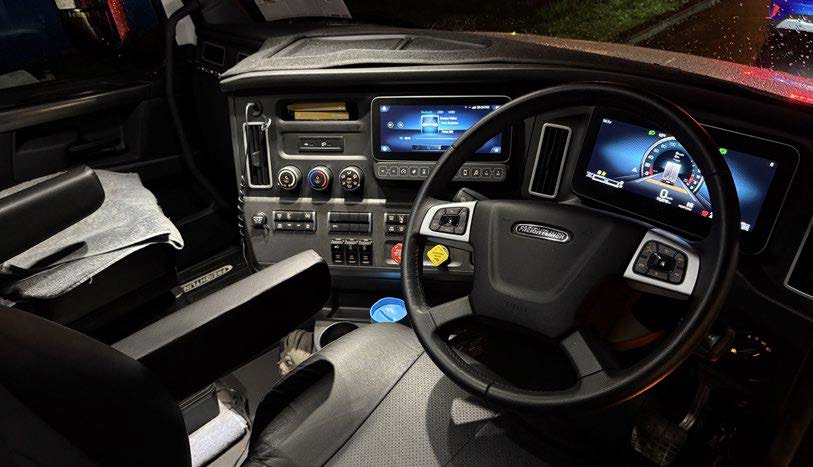
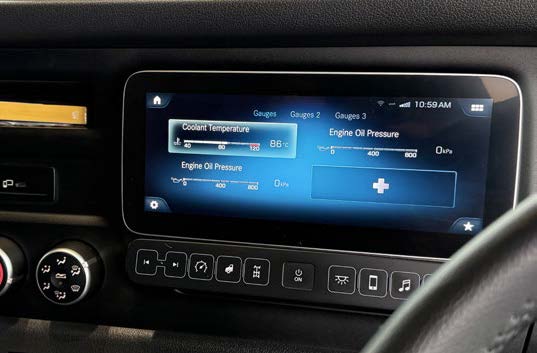
And the first was a glance over at the 12.3in digital driver’s display, which proudly proclaims an overall average fuel consumption of 2.5km/L. “Tristan and Joseph [Johnstone – team leader at Keith Andrews Timaru] reckoned we should get up to 2.6 or 2.7,” says Jimmy. Out of interest, Phil Taylor’s Hall’s Cold Chain Cascadia 116, which featured in New Zealand Trucking a year ago, averaged 2.11km/L with its 377kW (505hp) 13L unit and up to 22-tonne payload – proving the merits of higher horsepower on an unstressed run.
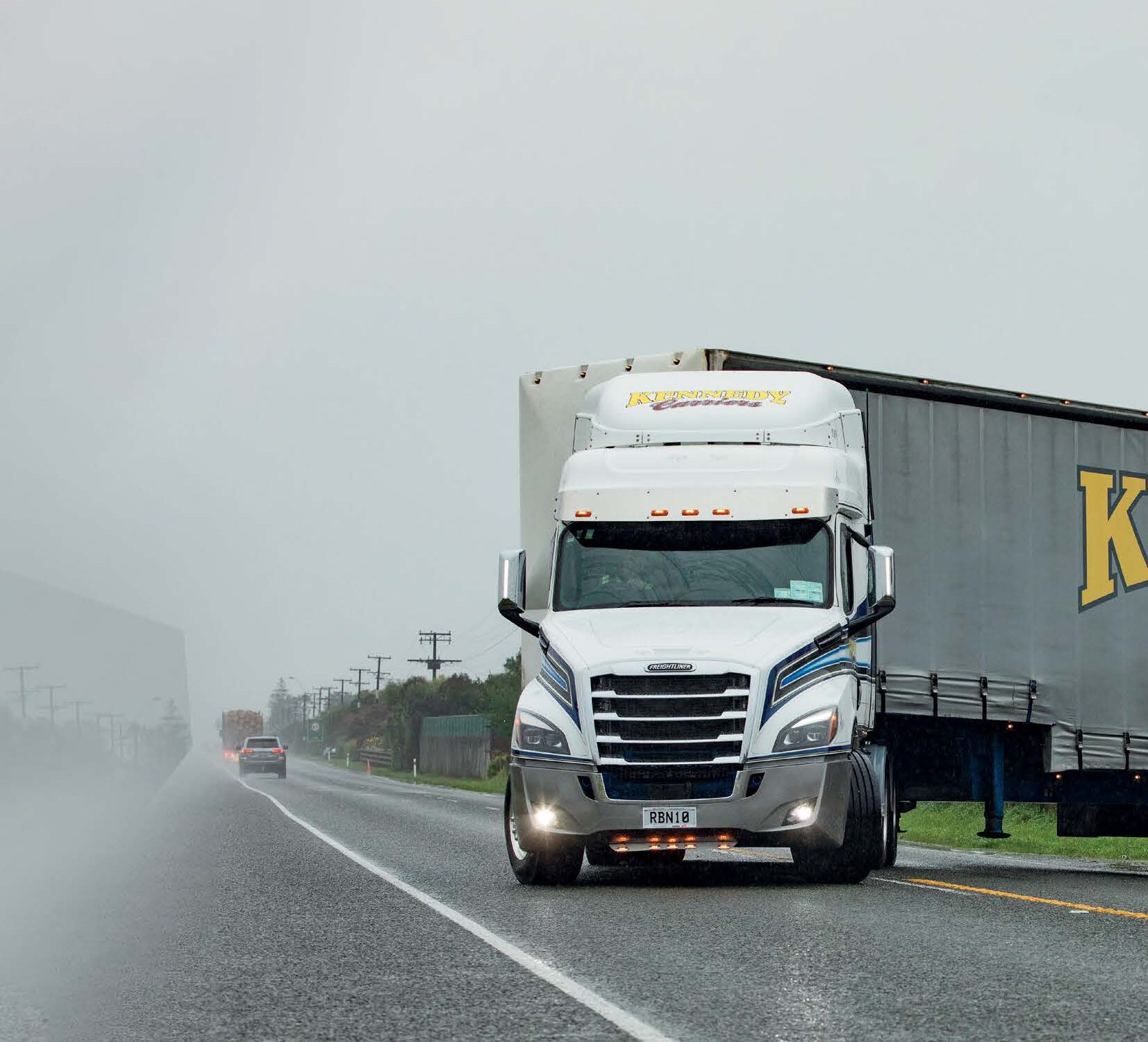
Of course, the other half of the Cascadia’s fuel-sipping abilities come from its wind tunnel-optimised aerodynamics. It’s a slippery shape, perfect for punching into the Canterbury wind, as Dave McCoid commented. Those advanced aerodynamics also make for an incredibly quiet drive, with the sound meter barely nudging 70db at 90km/h. Even opening the window at that speed reveals little noise or wind rush – it’s quite eerie, really.
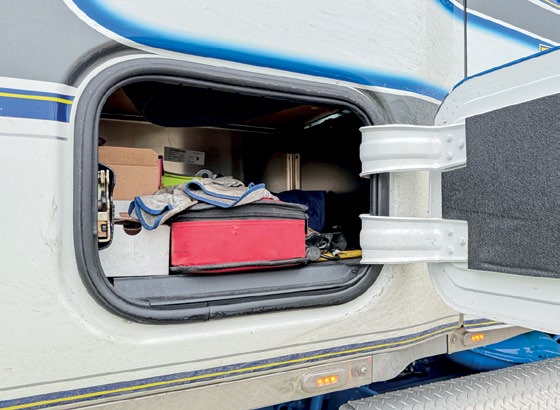
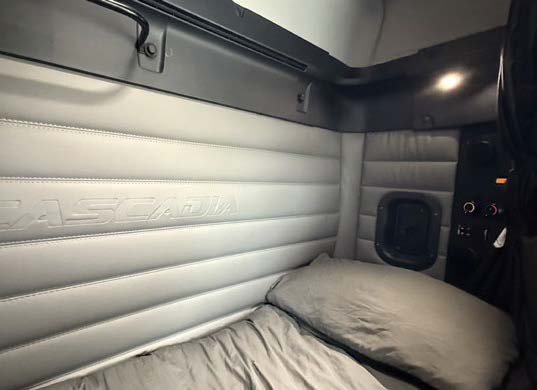
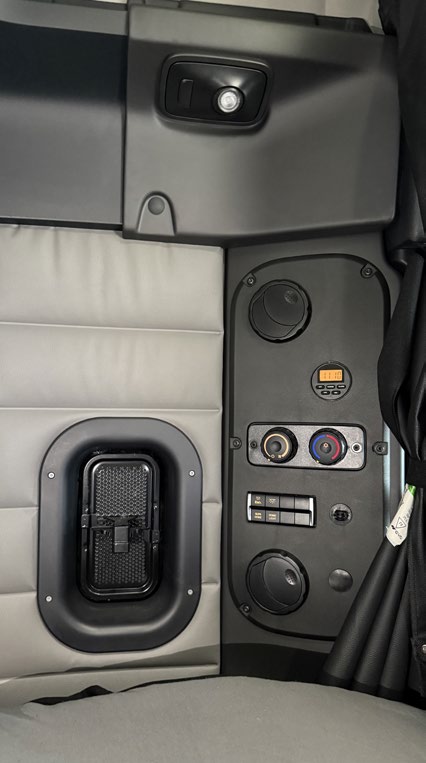
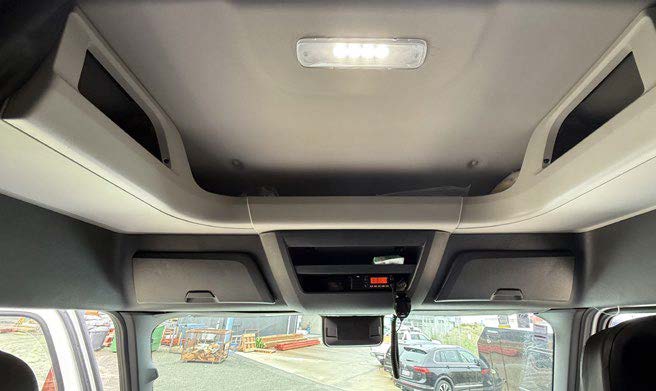
The calmness of the drive is further enhanced by a solidly built interior, with not one squeak or rattle – yet anyway … you probably can’t engineer out all the Americanness. The 36in XT sleeper provides plenty space of the storage, standing and sleeping varieties. Jimmy reckons it’s overall more spacious than the Coronado and that he gets an incredibly good night’s sleep in the bunk.
Riding on front taper leaf and rear Freightliner AirLiner suspension, the ride is firm but never jarring and the big semi navigates the twists and turns on its runs with confidence and a sense of sure-footedness. As you’d expect, it’s another step on from the Coronado, says Jimmy.
For those unaware, the 116 and 126 Cascadia model designations refer to their bumper to back of cab (BBC) measurements – 116in (294.6cm) and 126in (320cm), respectively.
In our famous Low-Bonnet Conventional Forward Vision Test (that is, measuring at what distance you can see the ground ahead of the bonnet from the driver’s seat), the International ProStar measured in just on 4m, while the McNulty Cascadia 116 we featured in November 2021 bettered it with a miniscule 3.75m. With is sloping bonnet, the view forward from Jimmy’s Cascdia 126 measured in at 4.8m – less cabover aping than its smaller bonnetted, smaller engined little brother, but if you’d been blindfolded and placed into the driver’s seat, you might still need a double take before realising you’re in a conventional.
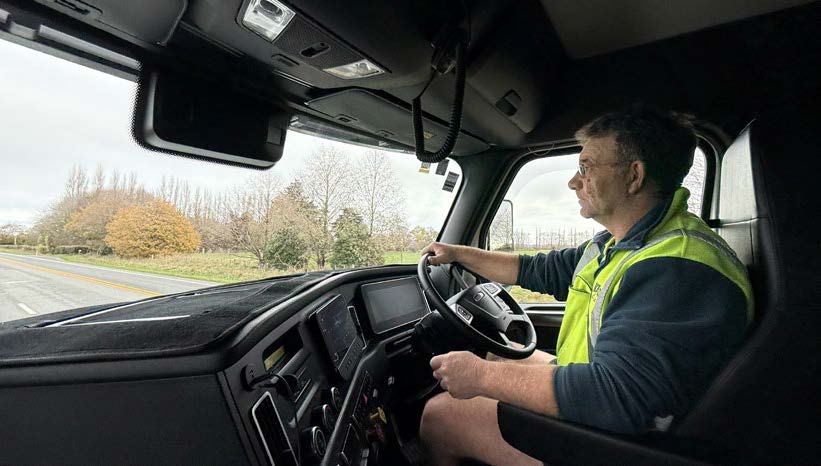
Interestingly, coming out of the trucks they normally drove, Jimmy and Arch had very different experiences the first time they took the Cascadia for a strop. “Dad was impressed. He’s nervous with bonnets; he finds them hard to judge, but he was immediately comfortable driving it,” says Jimmy. “It felt weird for me, coming off the Coronado. I probably struggled more at the start because I’d lost my visual reference. But it’s easy enough to position now.”
It’s fair to say the 447kW (600hp), 2800Nm (2050lb/ft) DD16 and DT12 overdrive AMT transmission add further refinement to the driving experience. It is a quiet drivetrain, so fans of snarling large-capacity units and boisterous Jake brakes may be disappointed – but, as we said earlier, this is not that kind of truck.
“The more I drive it and get more of a feel for it, the more I’m liking it,” says Jimmy as we start to get into the climbs. “I miss the gearstick in certain situations but not others. Around town and between Ōamaru and Greta Valley, I leave it in auto. It’s responsive and generally does what I want it to do. But out here, I like it in manual.”
While it does get on fine with climbs and descents in auto, Jimmy finds the DT12 can be a little eager to go up or down the box for his driving style. Perhaps it’s just a case of familiarisation after a career conducting proceedings? “I always knew in the other truck which gear I’d need for which hill, and just when to dab the brakes. But with this, at first, I found I was either too high or too low a gear, so I’ve been working out which is the best gear for each hill – I don’t like to rev their guts out or ride the shit out of the brakes all the time.”
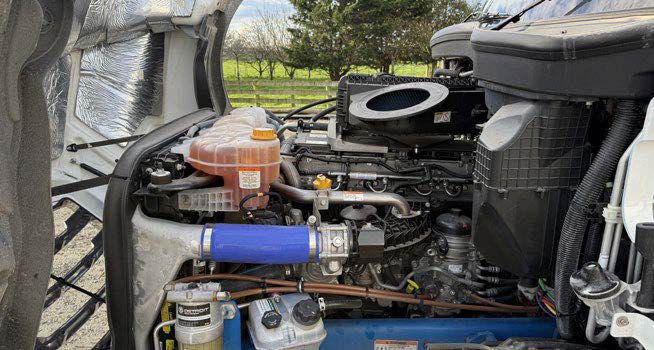
That said, the big DD16’s smooth power curve and wide, flat torque curve should suit Jimmy’s style of driving. Power grows consistently up to its peak at 1800rpm, while the torque delivery is at its best between 975 and 1470rpm. “It’s really happy at 1200 to 1600, but I’ll let it go down to around 1100. The DD15 in the Coronado was the same; I’d work it between 1100 and 1600. In auto, this’ll normally get down to about 1200 before it drops a gear up a hill, but often it doesn’t really need to; if you let it pull, it’ll have enough in it to hop over the top,” he says.
Two separate climbs along the Lewis had us cresting at 51km/h at 1550rpm in ninth, and 38 at 1200 in ninth, with Jimmy flicking down the gears to keep the DD16 humming in its happy place.
The three-stage Jacobs offers a good amount of retardation, in one instance, consistently slowing down the truck to about 25km/h as we descended the hill. “It’s impressive how it’ll slow the truck in stage three,” says Jimmy. “In the third stage, it’ll start to grab gears at about 1500, and it’ll get up to, say, 1800 and just hold it.”
Fitting right in
For a small operator loyal to one brand of truck, the prospect of ‘getting the new model’ can be both enticing and daunting. Why not get the new one, with improved space, comfort and technology, a fresh drivetrain, and warranty support? On the other hand, you’ve bonded with the old girl, it continues to serve with distinction, and you know how to get the best out of it. Why add that level of capex if there’s no real need to just yet? We can just picture Jimmy grappling with the dilemma – we know we probably would, too.
That said, with the Cascadia 126 now part of the family, it’s slipped into its new role with aplomb. There’s not a lot not to like. Perhaps Jimmy’s biggest gripe is some of the active safety features that are part of the Detroit Assurance 5.0 safety suite can be a little overeager. We’re starting to feel this is almost not worth a mention anymore; these systems were designed for optimal operation on roads very different to New Zealand’s, and no one OEM’s active safety suite seems to operate better or worse here than another’s. Still, it quickly gets annoying when the collision alert system thinks you’re about to plough into a road sign as you round a bend.
However, there’s so much to like about the Cascadia 126. Comfortable and easy to drive, powerful and efficient, smart and stylish – a truck that we’d really love to see more of up and down the nation. It was built for the type of run Jimmy does and more than capable of being that perfect companion week after week. We get the feeling it will hold its own in operation for Kennedy Carriers, just as the Argosy and Coronado did before it – another great relationship in the making. Well, that’s our insight anyway.
| SPECIFICATIONS | |
| Freightliner Cascadia 126 36in XT | |
| Tare: | 9820kg (load cert.) |
| GVM: | 24,000kg (load cert.) |
| GCM: | 65,000kg (load cert.) |
| Wheelbase: | 5125mm |
| Engine: | Detroit DD16 |
| Capacity: | 15.6L |
| Power: | 447kW (600hp) at 1800rpm |
| Torque: | 2800Nm (2050lb/ft) at 975-1470rpm |
| Emissions: | GHG17 (exceeds Euro-6) |
| Transmission: | Detroit DT12 OVX 12-speed overdrive AMT |
| Clutch: | Detroit HD AMT clutch |
| Chassis: | 11 x 85 x 287mm |
| Front axle: | Detroit DA-F |
| Front-axle rating: | 7258kg (load cert.) |
| Front suspension: | Freightliner Taper Leaf |
| Rear axle: | Meritor RT46-160 GP |
| Rear-axle rating: | 20,870kg (load cert.) |
| Rear suspension: | Freightliner AirLiner 46K |
| Brakes: | Disc, ABS, EBS |
| Auxiliary braking: | Three-stage Jacobs engine brake |
| Additional safety: | Electronic stability control. Tyre pressure monitoring system. Detroit Assurance 5.0 safety suite incorporating active brake assist (ABA), adaptive cruise control (ACC), side guard assist (SGA), lane departure warning (LDW), intelligent high-beam, automatic wipers and headlamps. Brake hold. Driver’s airbag |
| Additional productivity: | Intelligent powertrain management (IPM), Detroit Connect with fuel and safety analytics |
| Fuel: | 1070L |
| DEF tank: | 200L |
| Wheels: | Alcoa |
| Tyres: | 315/80 R22.5 (f) 275/70 R22.5 (r) |
| Electrical: | 12V |
| Cab exterior: | LED headlamps with daytime running lights (DRL), back of cab utility lights |
| Cab interior: | Driver and passenger air-suspended seats. Radio with Bluetooth, AUX input and USB connector. TV, under-bunk fridge, optimised idle HVAC, premium insulation. LED ambient lighting. Digital dash with 12.3in driver’s display and 10in infotainment touchscreen. |
Special thanks
A huge thanks to Jimmy, Aimee, Arch and Irene for the opportunity to tell some of your story and to feature the latest addition to the fold. What an insightful, feel-good couple of days – and proof there’s still so much space in the Kiwi trucking industry for an operation like yours. Keep on doing your “wee thing”.
Thanks, too, to Tristan Duffell at Keith Andrews Trucks for the technical information on the Cascadia 126.
Read more
Race to the Rock
0 Comments15 Minutes

The pay is better
0 Comments5 Minutes

Time to catch up
0 Comments6 Minutes